Race day
From choosing an event to getting home afterwards.
23 articles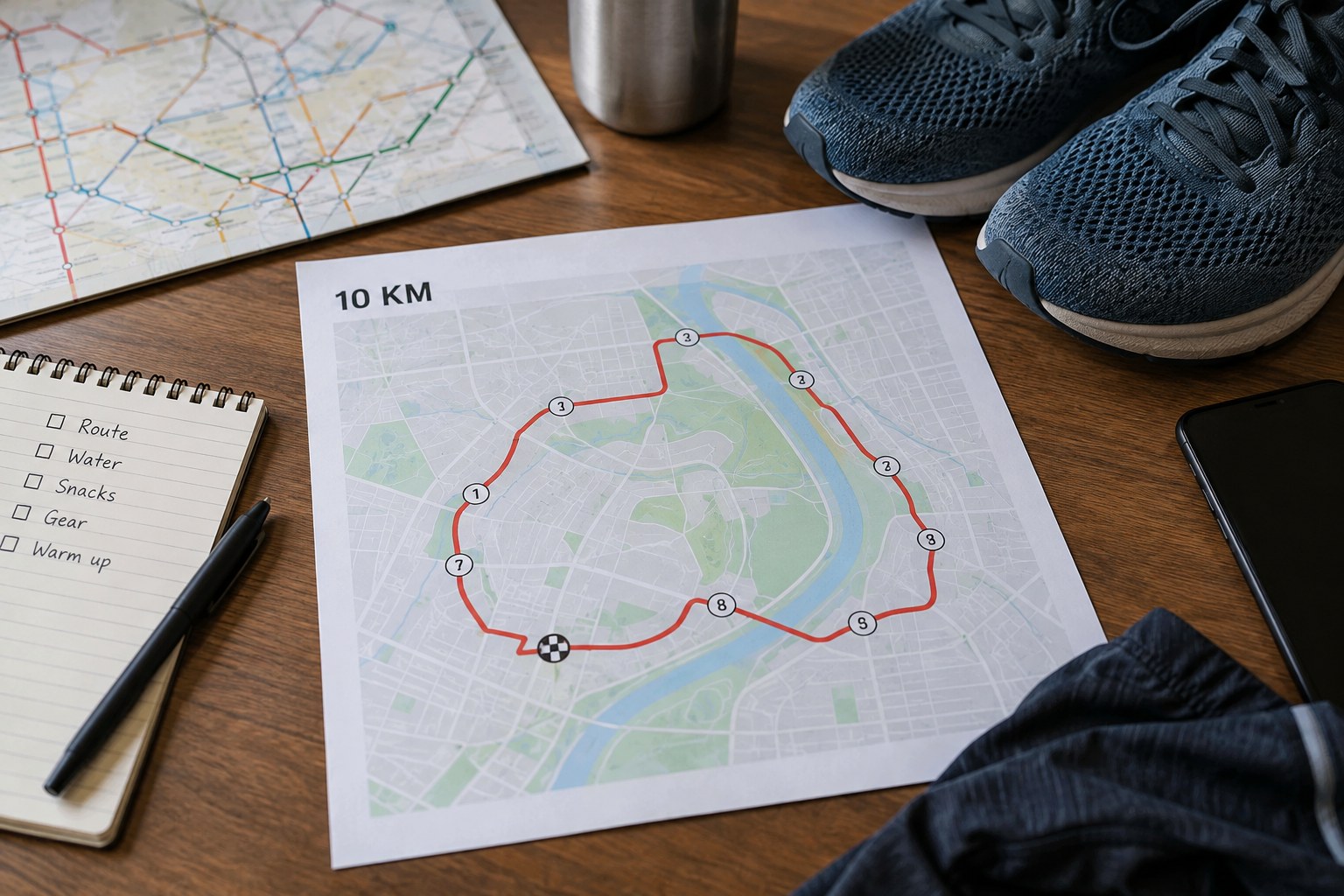
Choose a 10K by its course and logistics
Two races over the same distance can ask very different things of your day. Compare the course and the journey before comparing finish-time ambitions.
Read article ↗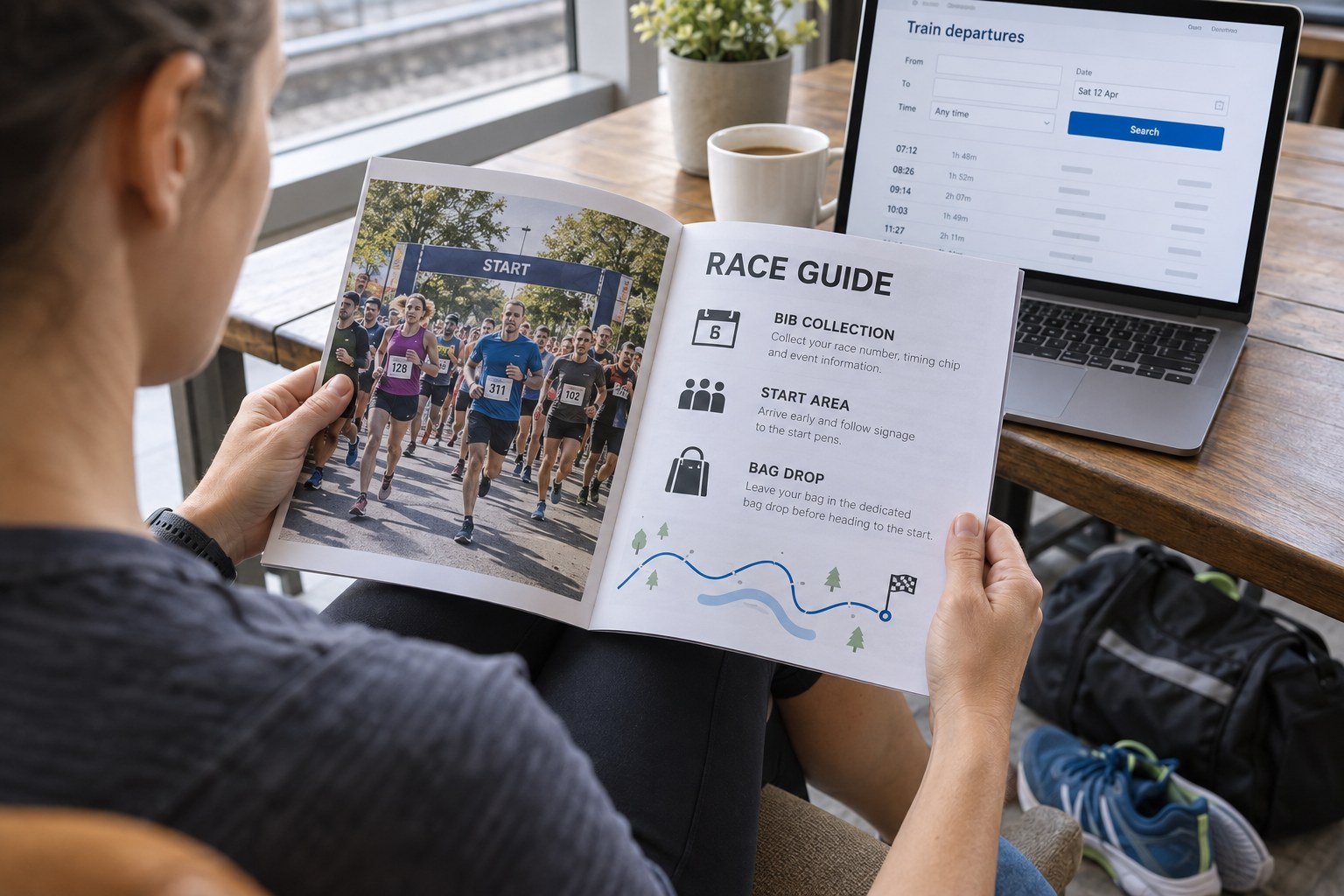
Read a race guide before booking travel
A race entry and a travel booking are separate commitments. Read the event documents as a sequence of places and deadlines before paying for either.
Read article ↗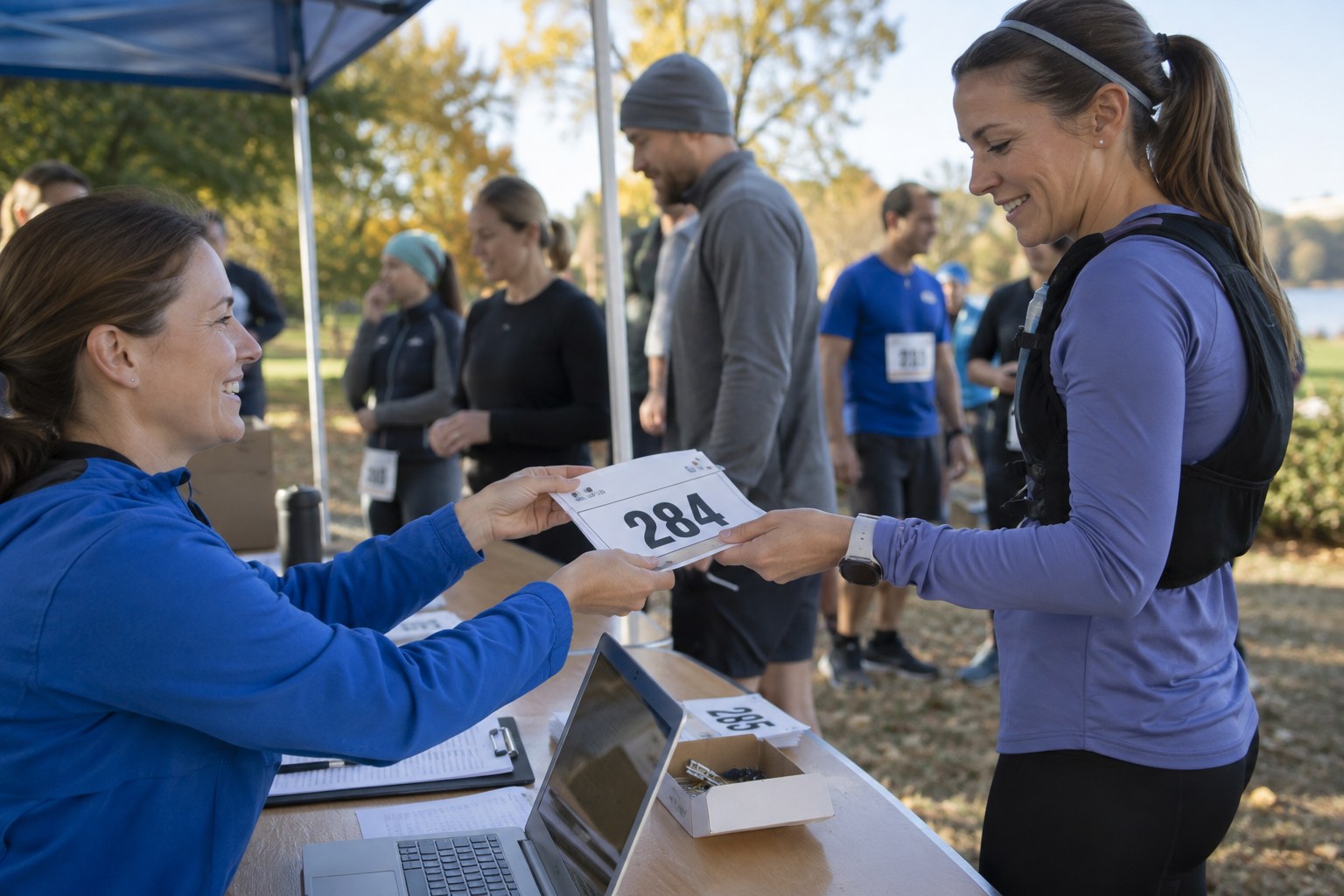
Plan bib collection without a last-minute rush
Bib collection is easier when the location, window and required documents are already clear. Treat it as an appointment with its own journey.
Read article ↗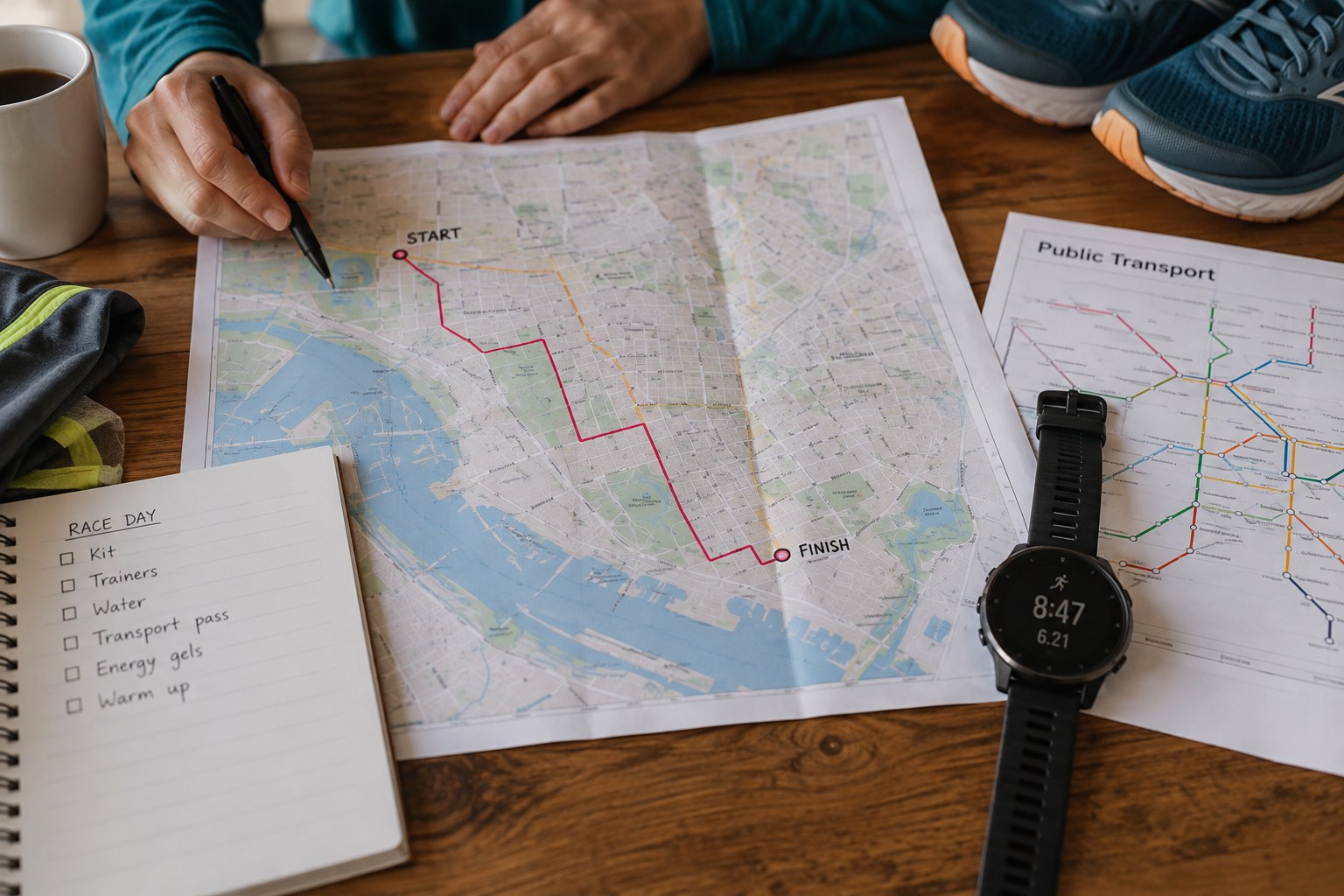
Check the start-area journey on a separate map
The map of the race course does not necessarily explain how to reach the start entrance. Give that short journey its own plan.
Read article ↗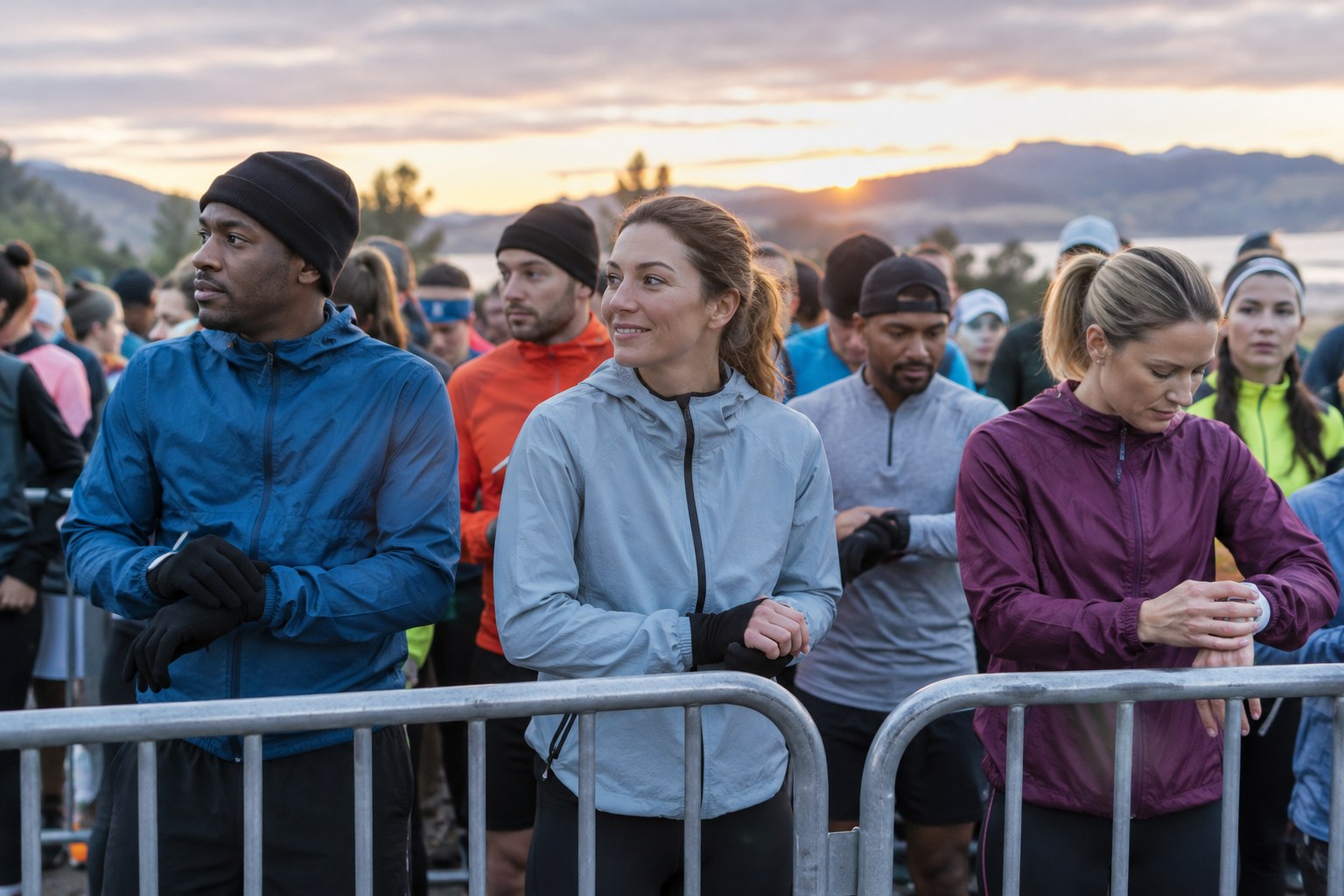
Prepare a start-line waiting layer
The clothes that suit running may not suit a long wait before the start. Plan what you will wear while standing still, and where it will go afterwards.
Read article ↗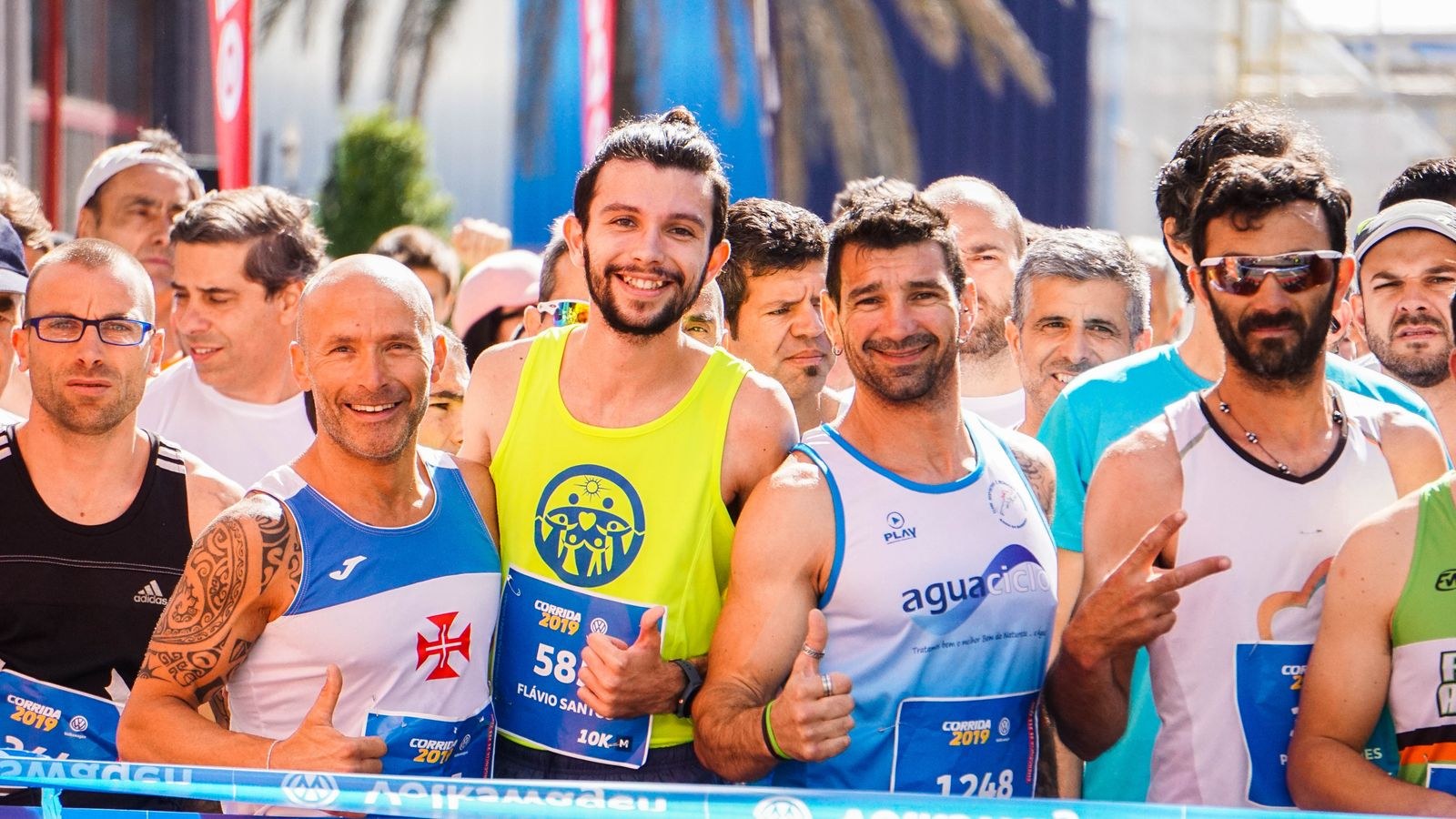
Choose a sensible starting position
A starting position should match the event’s instructions and the pace you expect to run. It is not a reward for arriving early or a prediction you must defend.
Read article ↗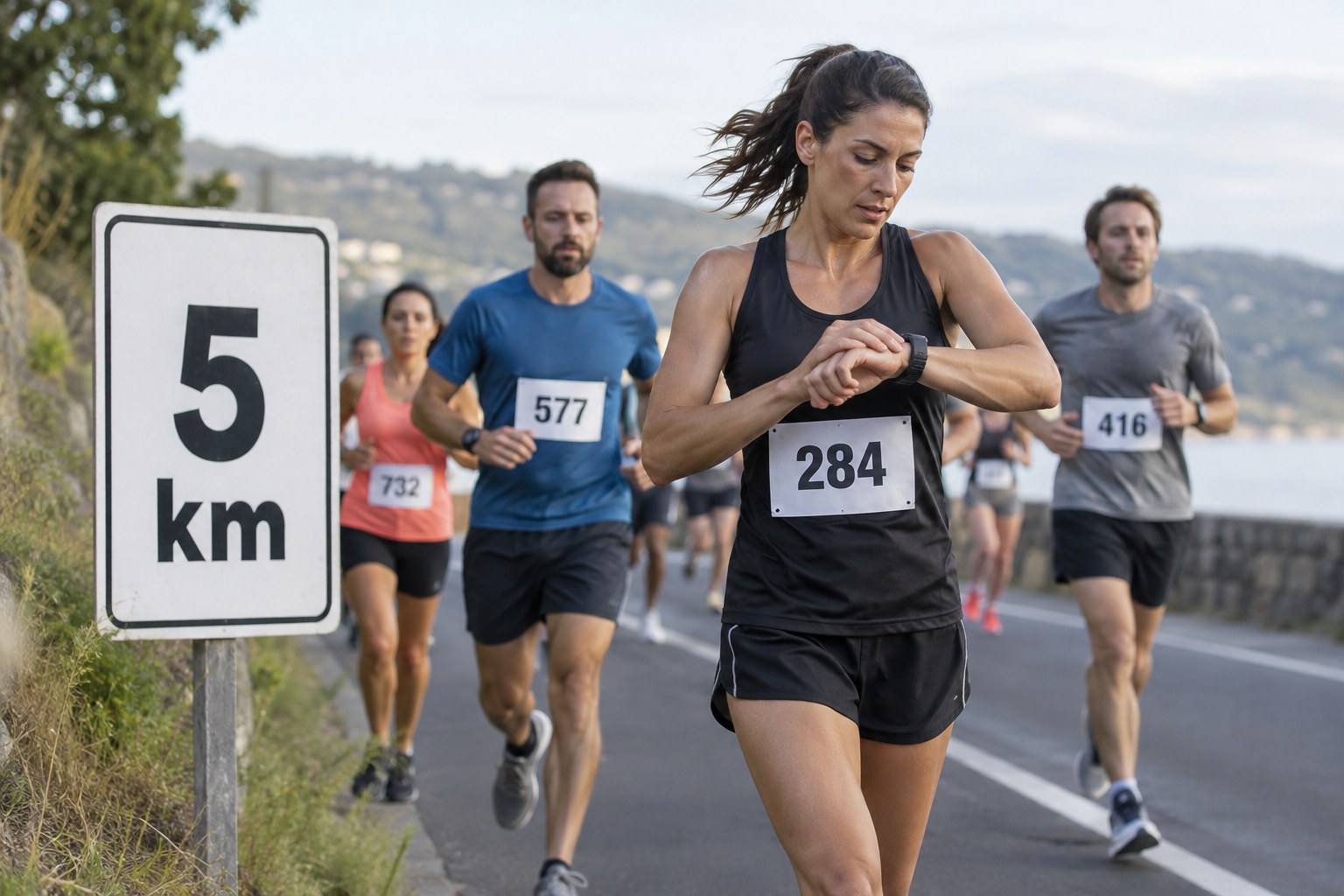
Use course markers alongside your watch
Your watch and the organiser’s distance markers describe the course in different ways. Use both without forcing them to agree at every point.
Read article ↗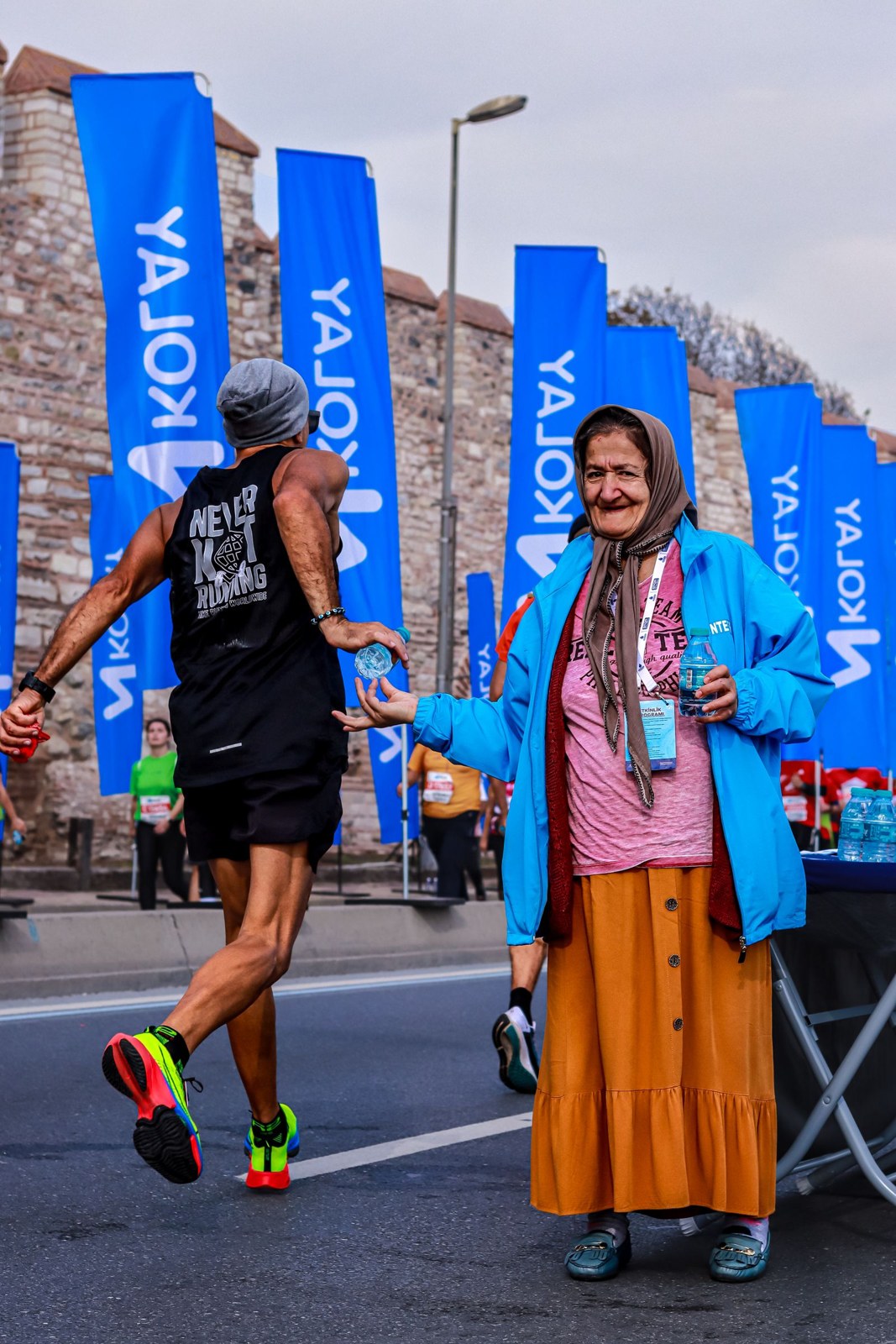
Approach an aid station without sudden changes
An aid station is a shared working area as well as a place to collect something. A predictable approach helps runners and volunteers use the space.
Read article ↗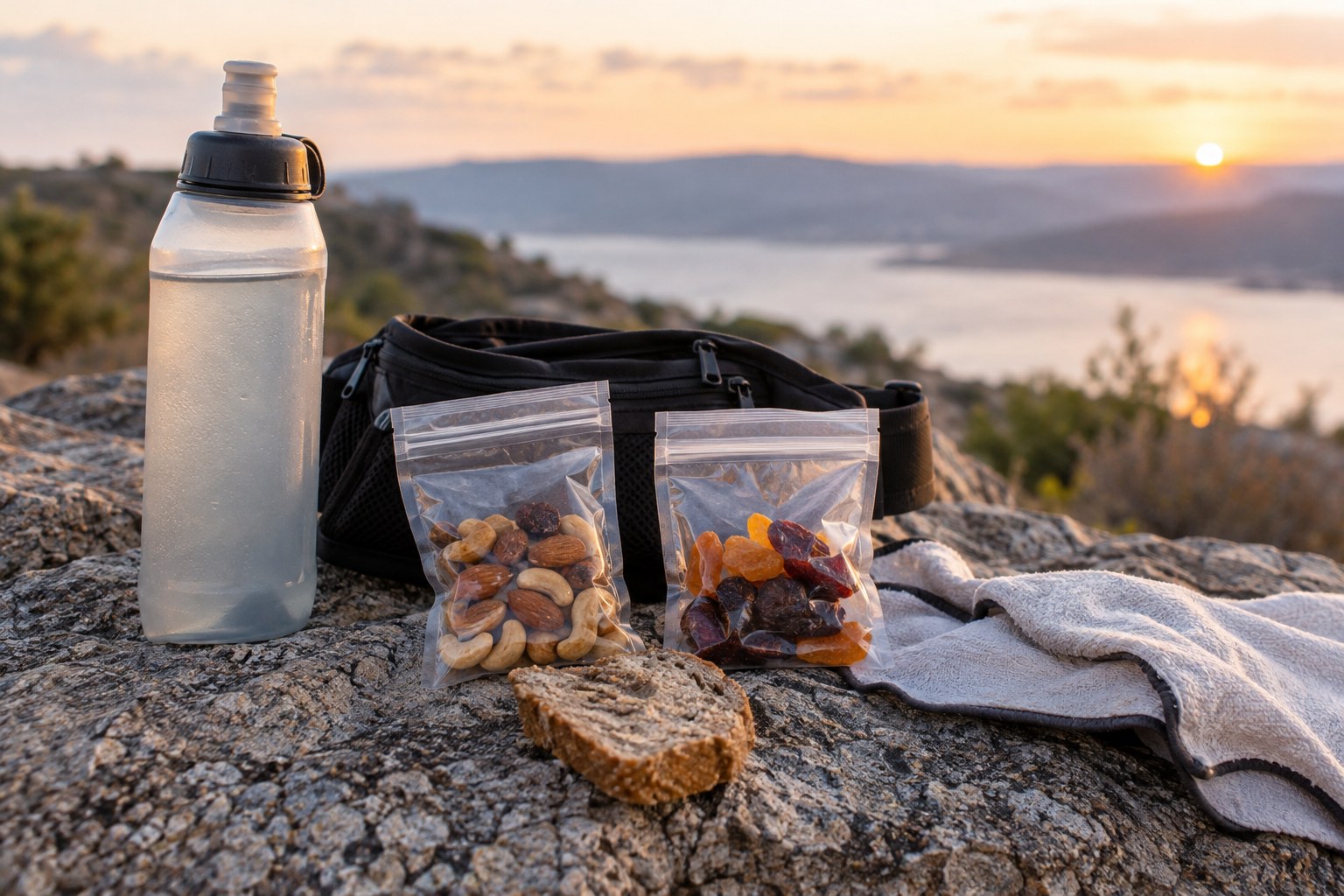
Test how you carry familiar food
A familiar snack can still be awkward to carry or open while running. Test the packaging and pocket arrangement separately from deciding what you want to eat.
Read article ↗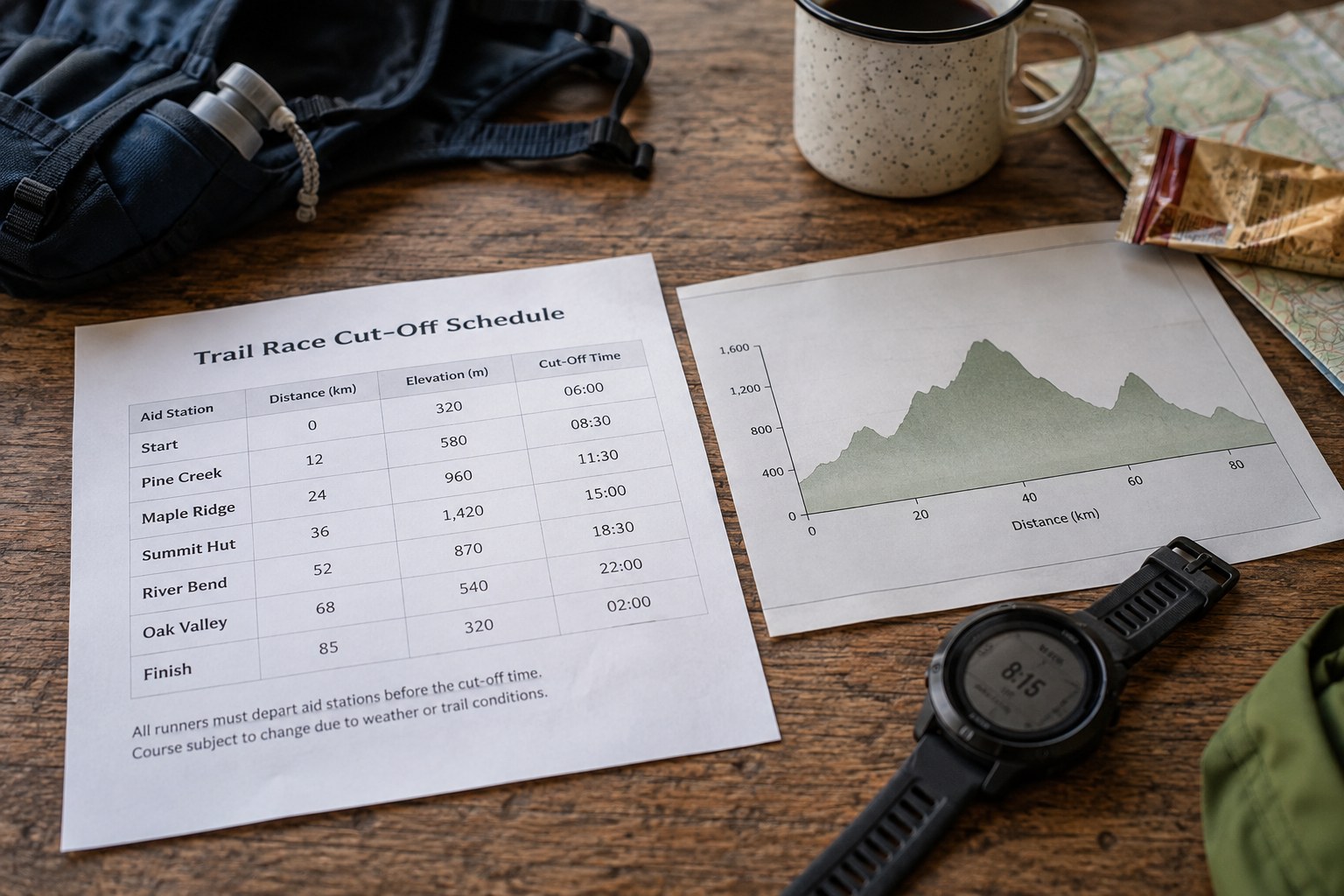
Read cut-off times before entering a trail race
A trail race’s cut-offs are part of its operating plan. Read where they apply and what they mean before deciding that the advertised distance fits your experience.
Read article ↗