Make a small comparison sheet
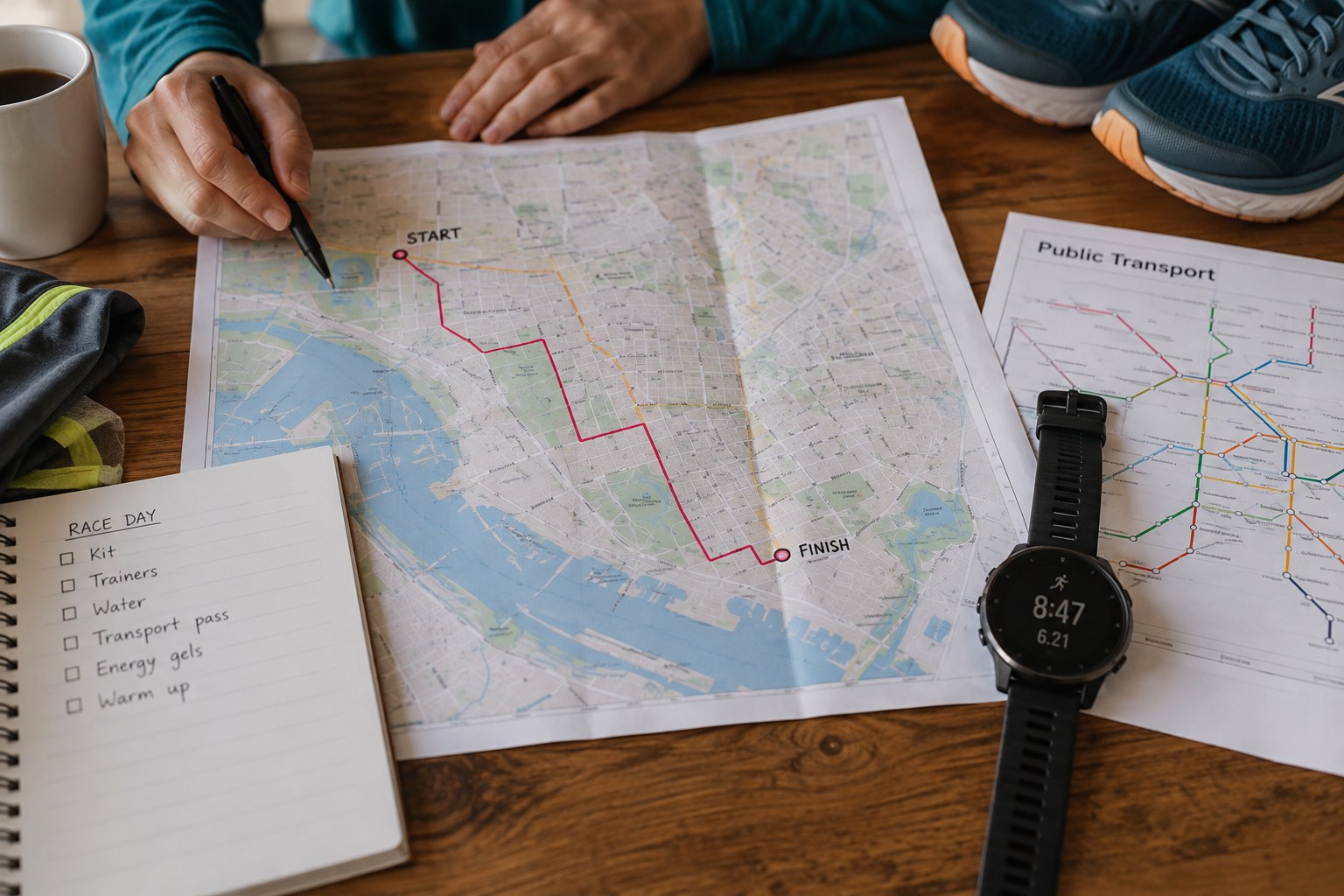
Write down the information that would change your choice: start time, start and finish locations, surface, elevation profile, transport and any stated time limit. Put those details beside each other for the events you are considering. A label such as city race or scenic 10K is not enough to explain whether the course has repeated climbs, narrow sections or a finish far from the start.
Use the current organiser’s information rather than a previous runner’s recollection of another edition. If the published route is provisional, keep that uncertainty in your notes. You can still compare the broad arrangements, but do not book a tightly timed return journey on the assumption that every entrance and road crossing will remain the same.
Think beyond the running distance
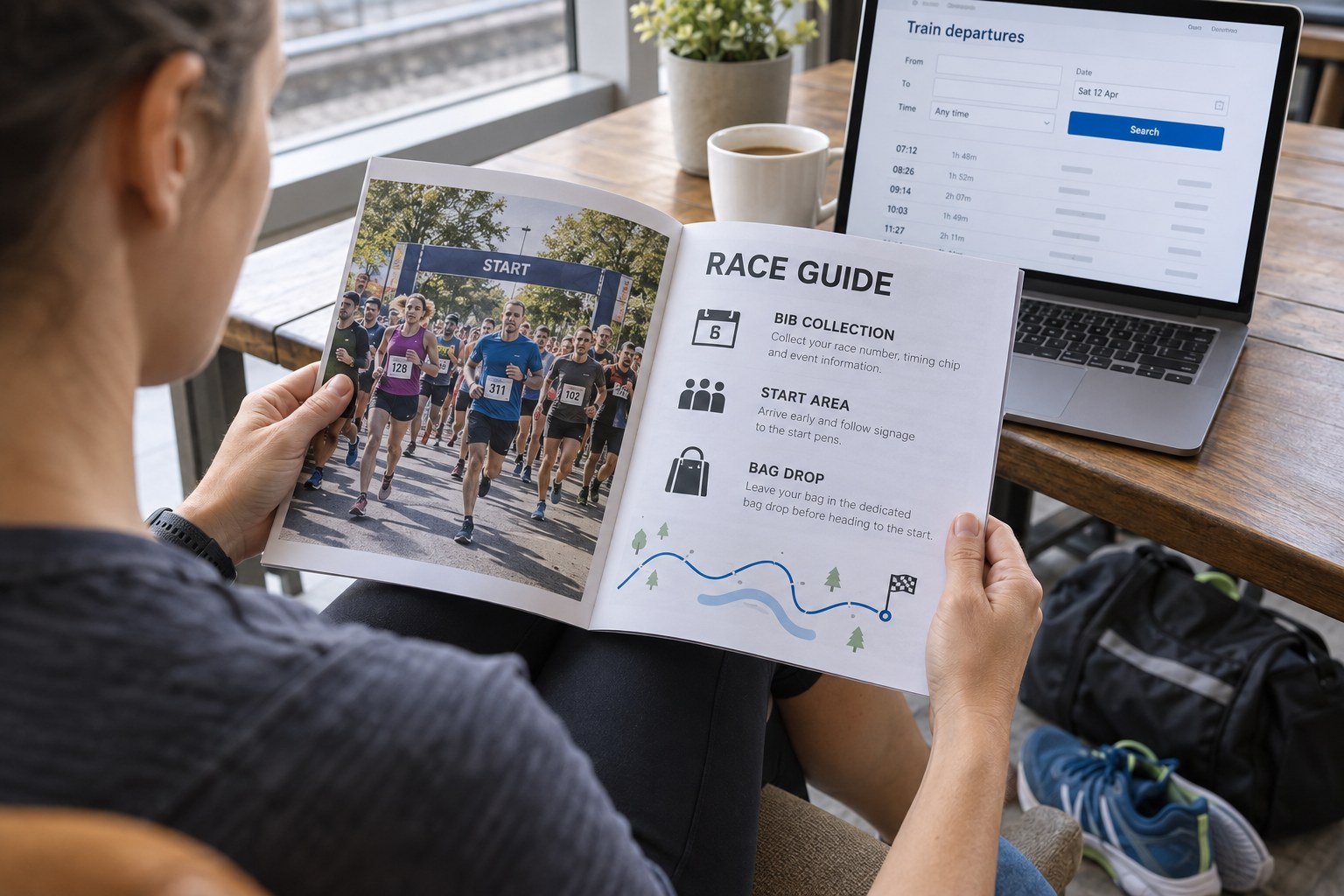
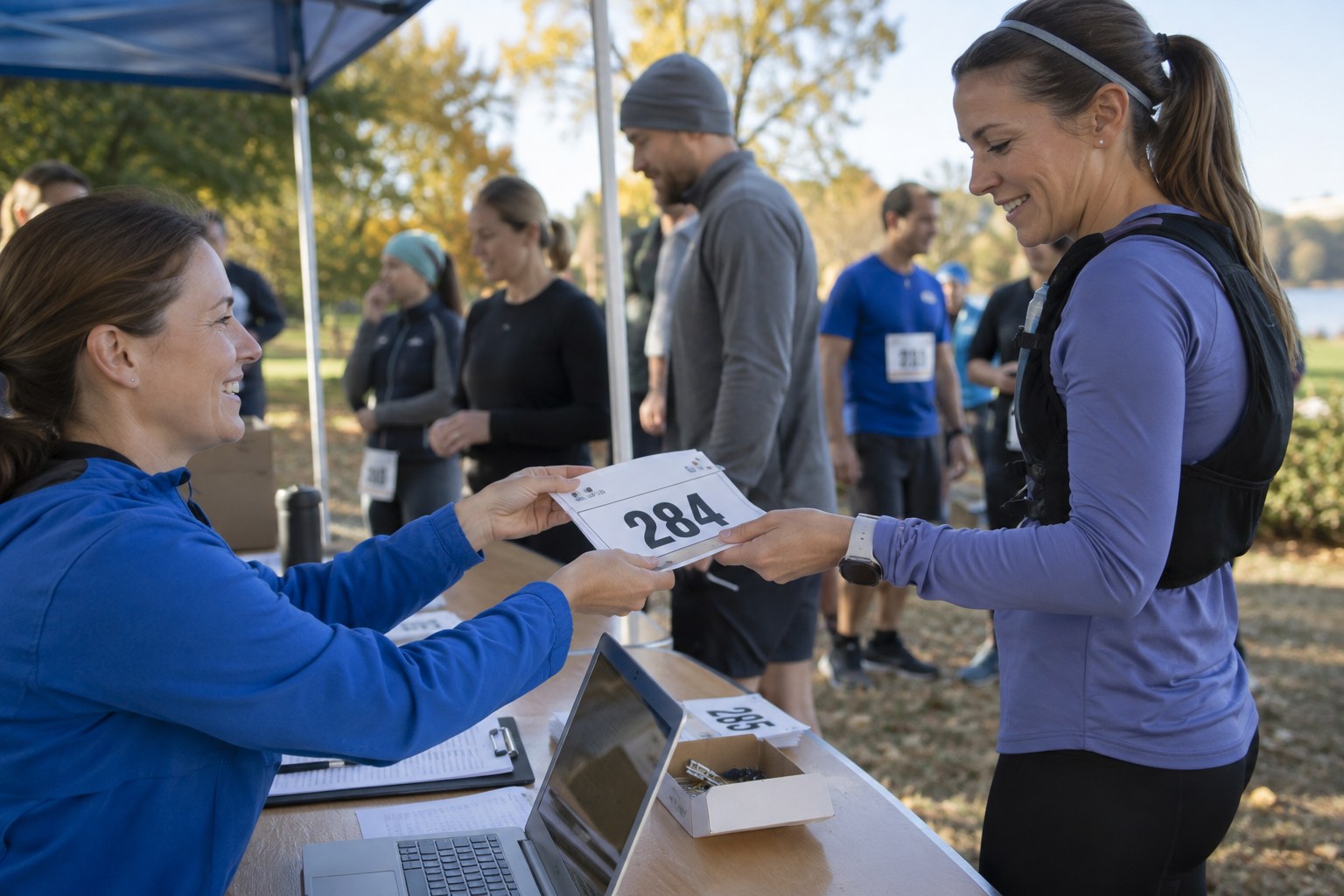
Add the journey from the station or car park to the event site. Check whether bib collection is on race morning or requires another visit. A nearby race with an inconvenient collection window may take more organising than a slightly more distant event that lets you collect everything on arrival. Neither arrangement is automatically better; the useful comparison is the complete demand on your time.
Consider who is travelling with you. A supporter may need somewhere to wait, a clear meeting place and a route that does not depend on crossing the closed course. If you are travelling alone, check what happens to your bag and how you will reach the return transport. Make no assumption that a small event provides storage or that a large one has unlimited capacity.
Imagine two possible Sundays. One event is close enough to reach by train, but requires bib collection on Saturday. The other involves a longer Sunday journey yet has confirmed morning collection and a finish near its start. Compare the two complete schedules rather than declaring the nearer event simpler. Include the additional trip, accommodation if needed, and the point at which you must commit to transport.
Give each event a short list of non-negotiable requirements before considering extras. These might be a return connection that leaves room after the finish, an accessible spectator meeting place, or a surface you already know. Then mark each requirement as confirmed, unresolved or unsuitable. An unresolved essential deserves a question to the organiser; it should not quietly become a tick because the entry price or medal looks attractive. Keep optional preferences separate so that one appealing feature does not conceal a practical obstacle.
Choose the challenge deliberately
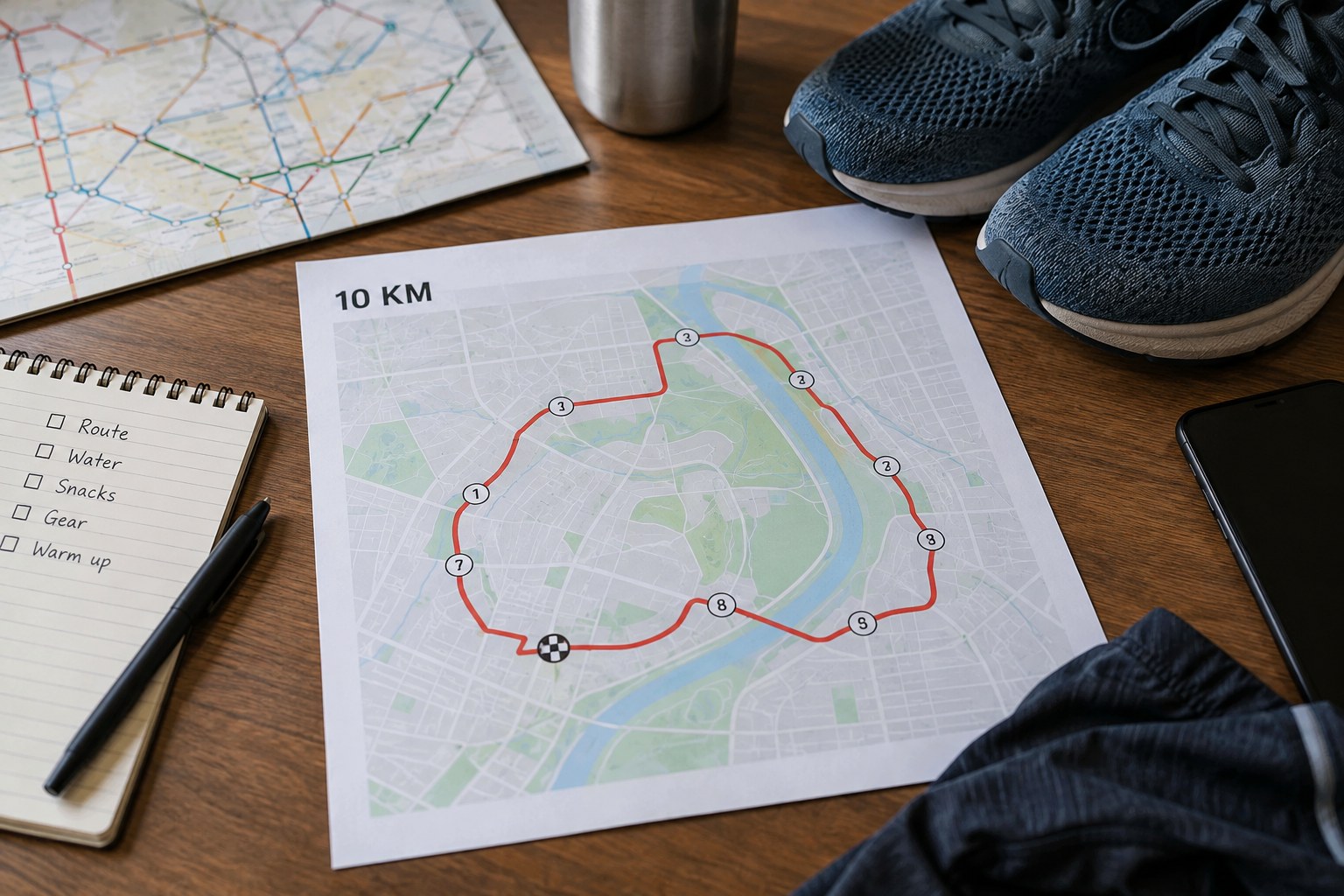
For a first 10K, a course you can understand and logistics you can manage may matter more than a reputation for fast times. Read the profile together with the map: a climb at the end and the same climb near the start create different planning questions. Surface changes can also matter even if the total ascent looks modest.
Before entering, finish the sentence: this event suits me because. A useful answer refers to the experience you want and arrangements you have checked. If the answer depends mainly on a friend saying that you should be able to run a certain time, revisit the choice. You can set a personal aim later; choosing an event is first a decision about the day you are prepared to organise.