Stay back while you assess the problem
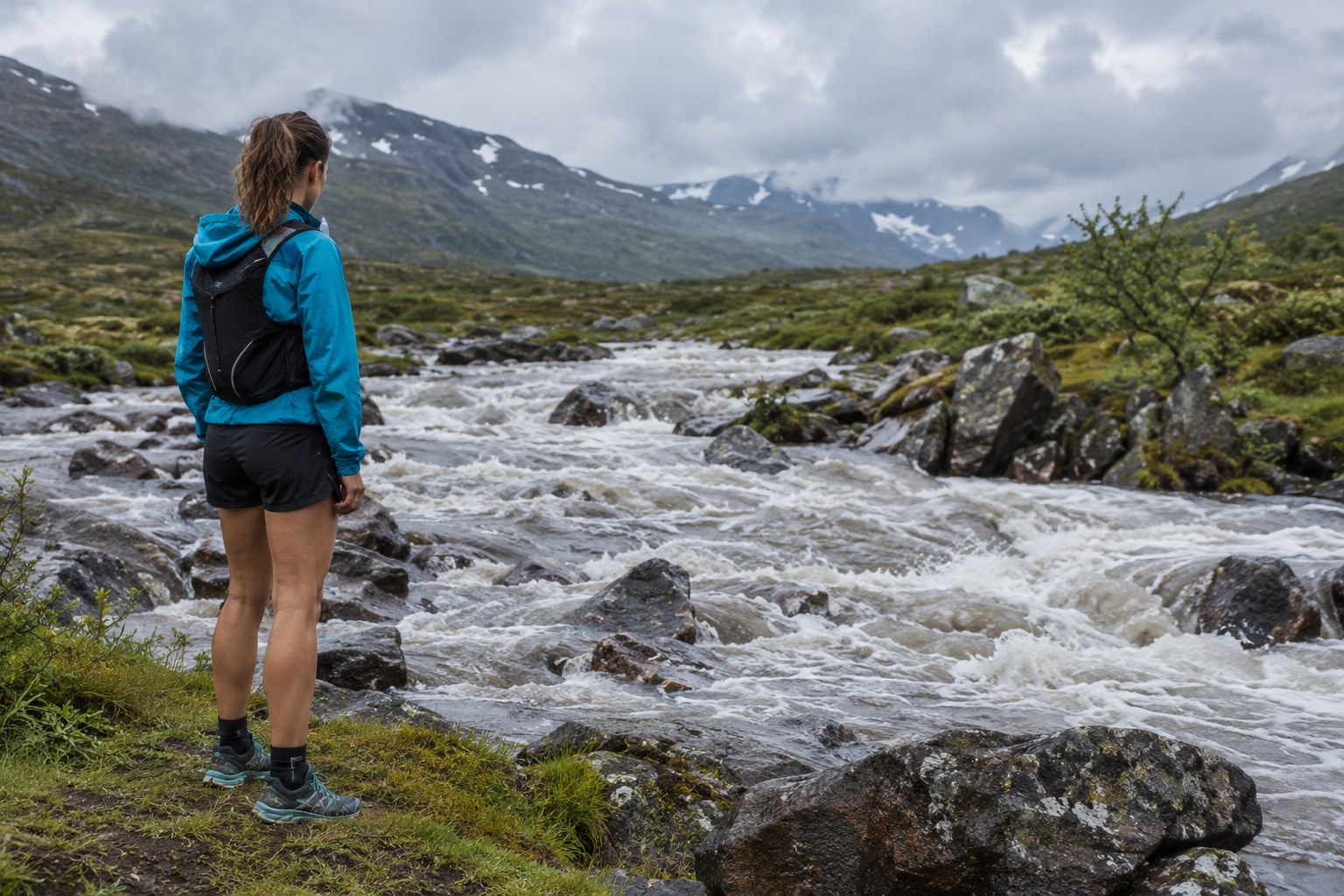
Stop on stable ground away from the edge and bring the group together. Water can conceal the surface underneath, and a familiar crossing may look different after rain. Do not send one person in to discover whether the rest can follow. If the depth, current, footing or exit makes the crossing doubtful, choose not to enter.
Avoid making the decision by watching another party. They may know the place, may be taking a risk or may have different abilities and equipment. None of those possibilities establishes that crossing is appropriate for your group. A GPX line drawn through the stream is equally unhelpful as proof: it records a route, not the present condition of the water.
Use the return you already know
Check the map from your safe stopping place. A mapped bridge on an authorised path may offer an alternative, but examine the full connection before committing to it. A line that appears close on the screen can require an awkward approach or a long detour. Do not wander along an unstable bank looking for an improvised crossing merely to preserve the original loop.
If no established alternative is clear, returning along the known route is a complete decision. Recalculate the time, daylight and supplies required. Tell the person expecting your return if the change affects the agreed check-in, when you can do so safely. A delayed message is better than using a phone while standing close to uncertain water.
Distinguish turning back from waiting for a change
Once the group has decided not to cross, make the next action explicit. Waiting beside the water without a reasoned plan can quietly become another attempt as impatience grows. Move back to a safe point where you can read the map and discuss the return without anyone standing at the edge. Keep the decision about the whole group rather than allowing one confident person to begin crossing while the others are still considering it.
Compare the known return with any established bridge alternative using actual route information. Include the extra climb, the final road connection and the time to reach transport. If the alternative introduces more unknowns than it removes, the familiar return may remain preferable even when longer. Mark the abandoned crossing in your notes as a conditional point to check on future visits, not as a permanent shortcut that failed only because someone lacked confidence.
Remove the pressure to continue
A parked car on the far side, a booked meal or the desire to finish a route can make retreat feel inconvenient. Those arrangements should be revised rather than used as reasons to enter doubtful water. For future point-to-point outings, identify how you would get home if the route became impassable before the final section.
Afterwards, report a damaged bridge or unexpected obstruction to the relevant land manager when an appropriate reporting channel exists. Describe the location and what you observed without presenting your assessment as a permanent closure notice. Conditions may change again. Keep the useful lesson in your route notes: this itinerary depends on a crossing that must be reassessed, not assumed available because a previous visit succeeded.