Give the ground time to arrive
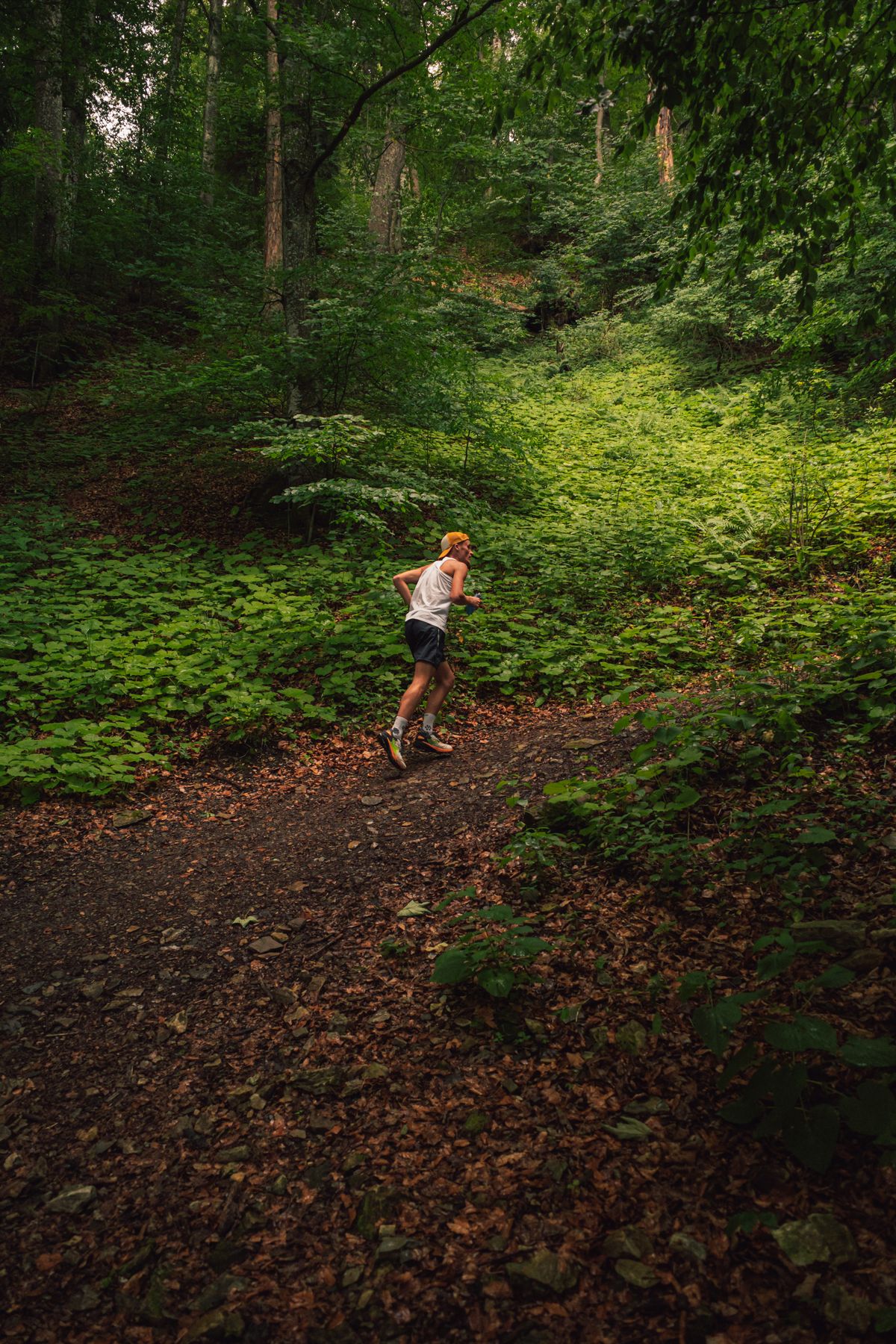
On an open, even stretch, look far enough along the path to notice its direction and other users. As the surface becomes rougher, bring more attention to the ground you are approaching. There is no universal number of metres that works at every speed. The useful question is whether you have enough time to slow down before the next uncertain patch reaches your feet.
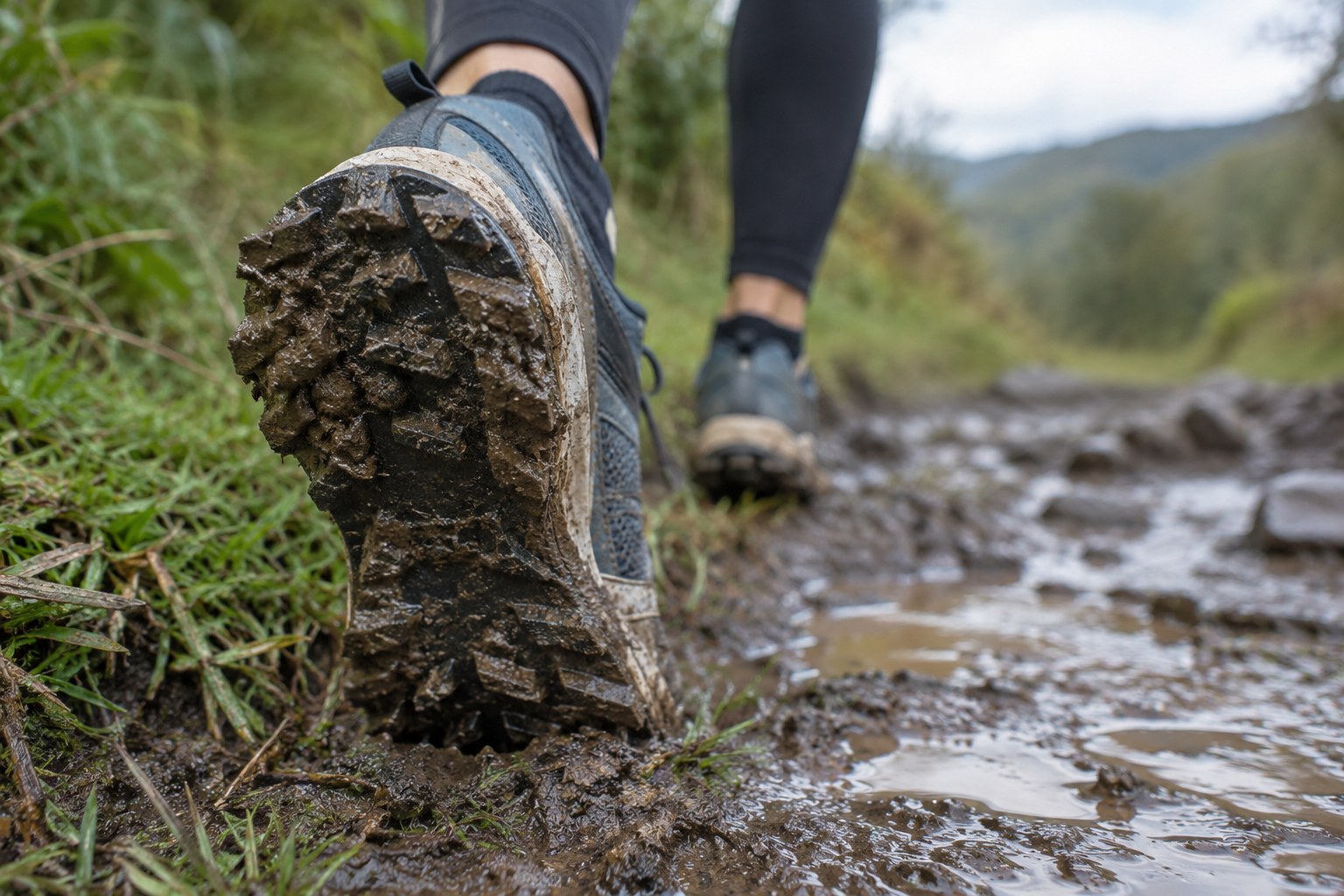
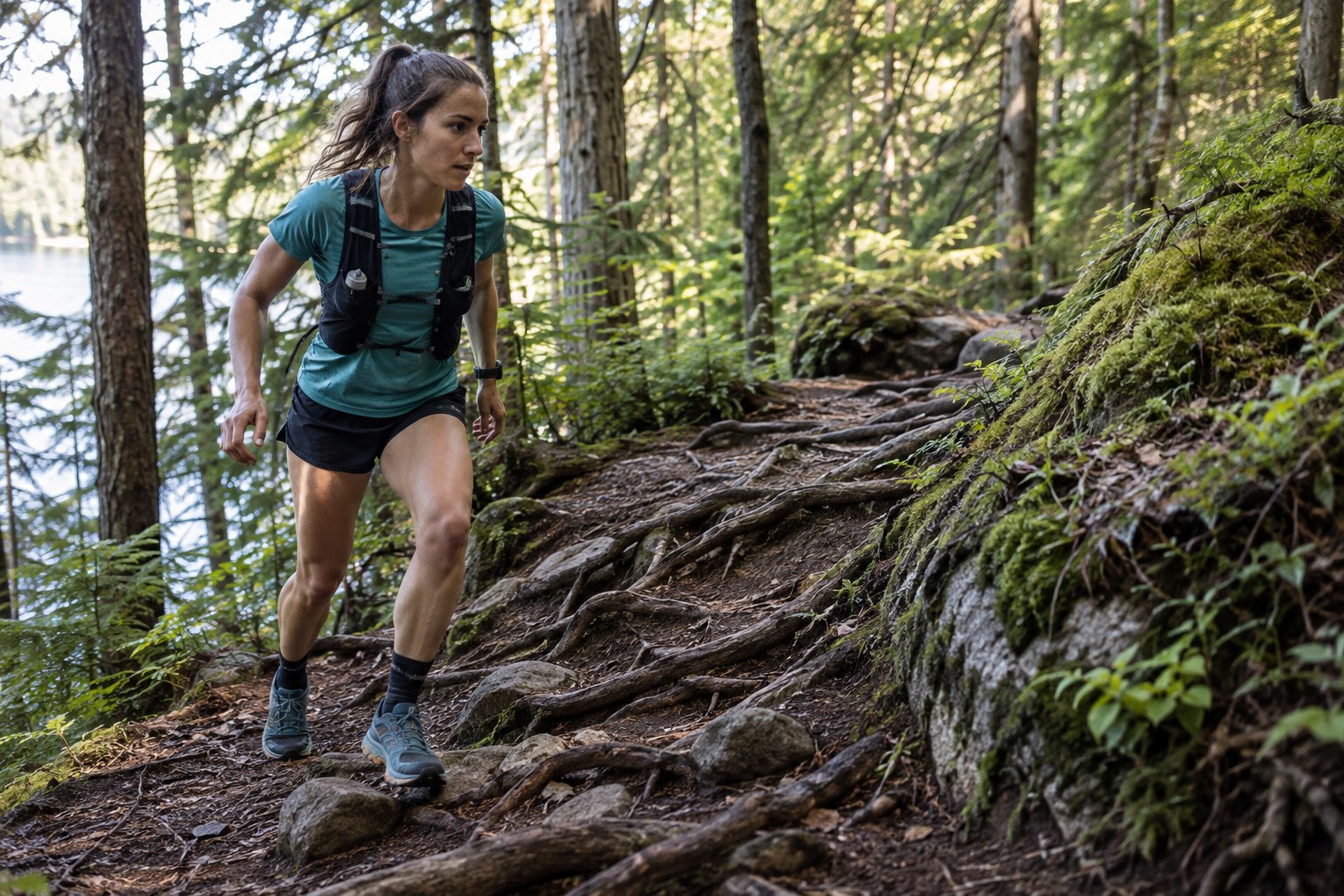
A bend, a band of roots and a puddle ask different questions. At the bend, you need to know what you cannot yet see. Near roots, you need time to choose between stepping over and walking through. At a puddle, its edges may be more churned up than the middle, but the water can hide depth and footing. Slow down rather than choosing a line on appearance alone.
Keep observations separate from assumptions
A pale rock may be firm or loose. A dry-looking leaf layer may cover an uneven surface. Treat colour and texture as clues, then adjust as you get closer. Following another runner does not remove this responsibility: their footsteps may hide exactly the piece of ground you need to inspect. Leave enough space to see a usable area of trail rather than only their heels.
If you repeatedly notice obstacles at the last moment, reduce the pace or walk. Trying to look harder while maintaining a speed that leaves no decision time usually makes the outing more tense. A short walking section also lets you look around, check the route and regain a broader picture of the surroundings instead of fixing attention on one difficult step.
Stop for tasks that compete with looking
Reading a map, adjusting a jacket and opening a food wrapper all draw attention away from the path. Move to a safe place out of other users’ way before doing them. A watch alert can wait until you reach easier ground; it does not make a rocky section an appropriate place to study a screen.
Practise on familiar, gentle terrain by noticing one change at a time: the transition from gravel to soil, a narrowing path or a sloping edge. The purpose is not to turn the outing into a technical drill. It is to build the habit of changing speed before the ground forces an abrupt reaction, while still noticing signs, people and the direction you intend to travel.