Define what you are testing
Choose a normal planned run and keep its intended effort. The rehearsal concerns waking, dressing, packing and leaving, not proving fitness. Write down the expected departure time and work backwards through the tasks that have to happen first. Include ordinary details such as finding keys, checking transport information and taking the bag to the door.
Keep food and drink familiar rather than introducing a special routine simply because the day is called a rehearsal. If you have individual nutrition questions, address those separately with an appropriate professional. For this exercise, notice whether the arrangement fits the available time and whether you have forgotten a practical step.
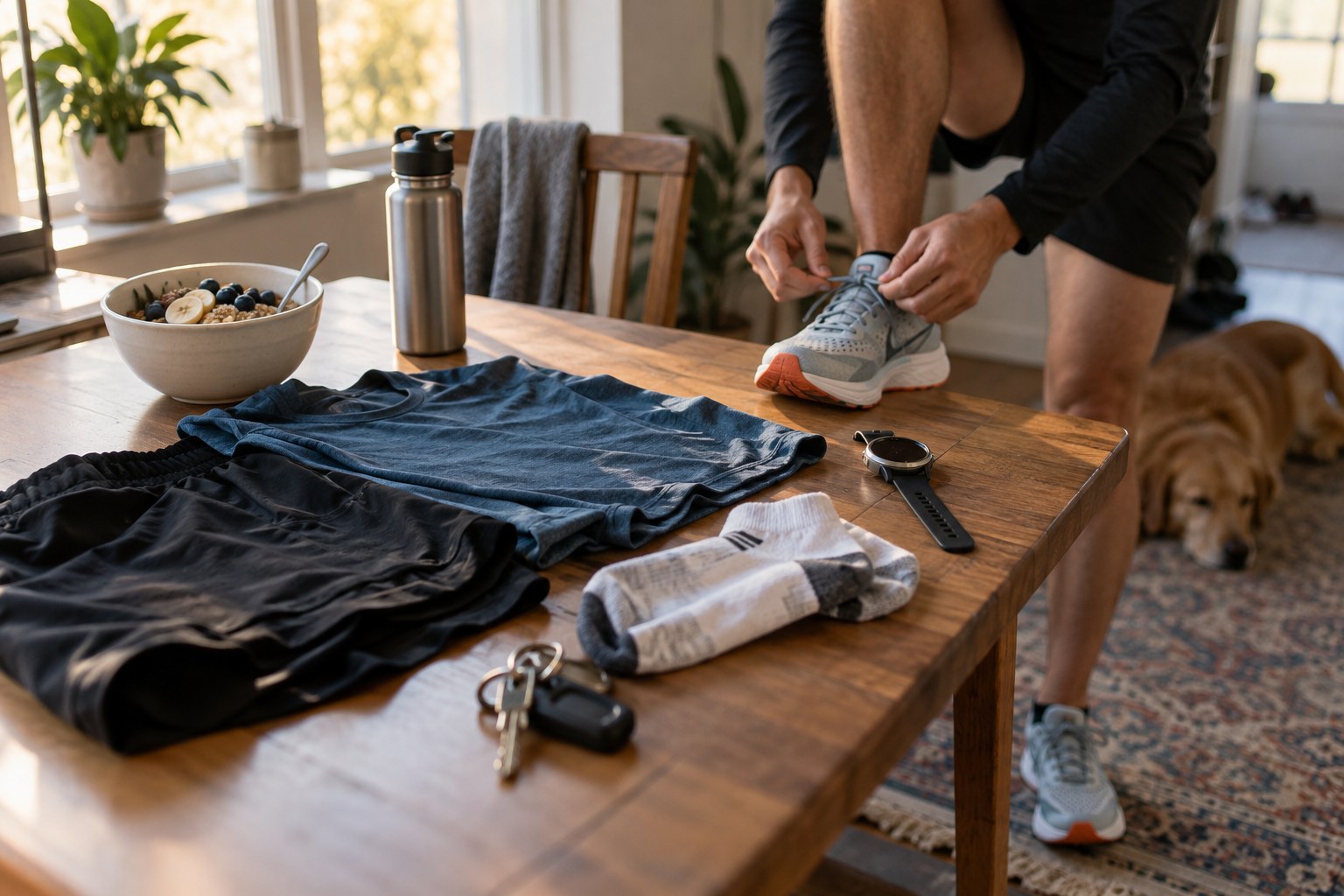
Use the actual outfit and pockets
Wear the layers and carrying system you expect to use, provided they suit the day’s weather. Place the phone, keys and other items in their planned pockets. If your bib is not yet available, think through where it will sit without attaching anything that could create an unnecessary hazard. The useful question is whether straps, zips and access work together.
Check whether you can find the watch screen you need and whether any alerts are distracting. A quiet local outing is a better place to discover an unfamiliar button sequence than a crowded start. Do not try to reproduce every race feature; focus on equipment you will actually handle.
Include a small waiting period
Think about what happens between arriving and beginning to run. If you can safely practise a brief wait in suitable conditions, notice whether your clothing arrangement still makes sense. Otherwise walk through the sequence at home. The lesson may be as simple as keeping a removable layer accessible until the last appropriate moment.
Do not deliberately make yourself cold or uncomfortable to make the rehearsal feel authentic. You are checking the organisation of the layers, not testing how much discomfort you can tolerate. Any event-specific disposal or handover plan must still follow the organiser’s instructions.
Follow the routine through the return
After the outing, use the finish bag arrangement you planned. Can you reach dry clothing without placing everything on a wet surface? Are the travel items separate from muddy shoes? If a supporter will hold the bag on race day, give them a clear description of what belongs where rather than assuming they will recognise the important pocket.
Look at the whole elapsed period from preparation to being ready for the next part of your day. The run itself is only one segment. This helps you identify a departure schedule that was too optimistic without misinterpreting the rehearsal as a slow training session.
Keep the changes small and specific
Write down two or three observations while they are fresh. Replace vague conclusions such as be more organised with a concrete action: put the ticket in the outer zipped pocket, charge the watch earlier, or leave the spare layer outside the sealed finish bag. Each action should solve a problem you actually noticed.
You do not need to repeat the entire rehearsal every weekend. Test a changed item during a suitable ordinary outing, then keep the successful arrangement. Event updates may still require adjustments, but a familiar sequence gives you a stable base from which to make them.