A useful gap changes with the path
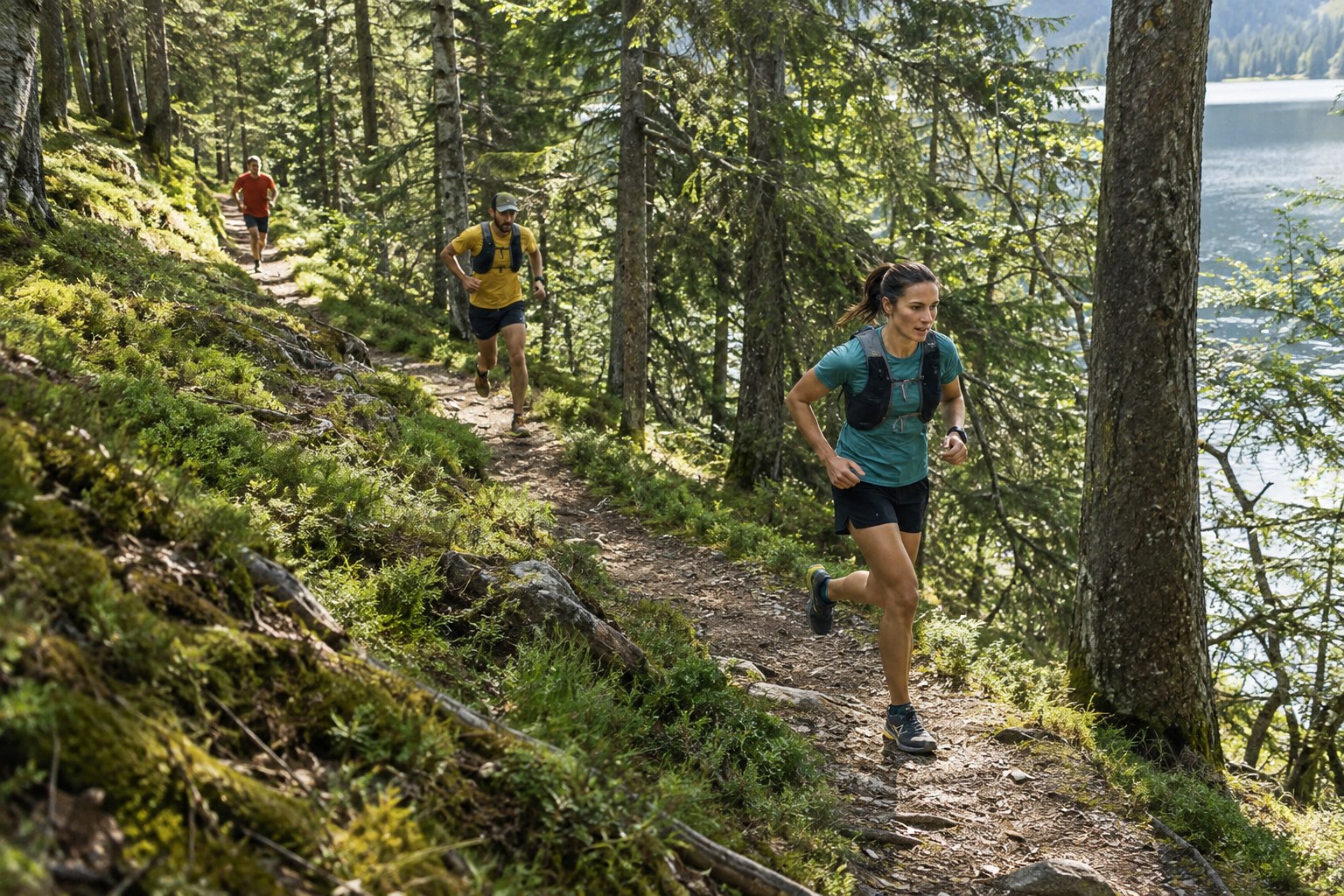
Do not choose one fixed distance and assume it suits the whole route. On an open, level track, the group may travel fairly close together. When the path becomes rough, steep or difficult to see, increase the gap until you can observe the ground and slow without catching the person ahead. If you can only see their shoes, you probably need more room.
Spacing matters even when everyone is moving slowly. A runner may stop for a branch, a gate or a problem with kit. Leave enough room for that pause to happen without passing the surprise backwards through the group. Tell companions when you intend to stop, and choose a broad place whenever possible rather than halting immediately beyond a blind bend.
Let passing be a conversation
If you catch someone, announce your presence politely and wait for a suitable place. Do not assume that a quiet greeting means they have identified a safe way to move aside. They may have hearing difficulties, be concentrating on footing or be responsible for a child or animal. Slowing to walking gives both parties time to understand the situation.
When allowing a pass, stay on stable ground and make your intention clear. A narrow trail is not the place to step blindly into vegetation or towards a drop. If there is no room, continue calmly to a wider section. The few moments involved are part of sharing the route, not a delay that has to be recovered with an abrupt acceleration.
Agree where the group comes back together
Extra space can cause a group to stretch out. Choose regrouping points that are visible and unambiguous, especially at junctions. The person reaching a turn first should not assume everyone behind saw the same marker. Wait where the whole group can gather without blocking the path, then confirm the next direction before moving on.
If one runner repeatedly needs more space or a slower pace, change the group plan. Continually opening a large gap and then sprinting to close it is a poor substitute for agreement. Keep the outing within the comfort of the people who are actually there. A route described as easy still deserves calm spacing when visibility, traffic or footing makes it more complicated.