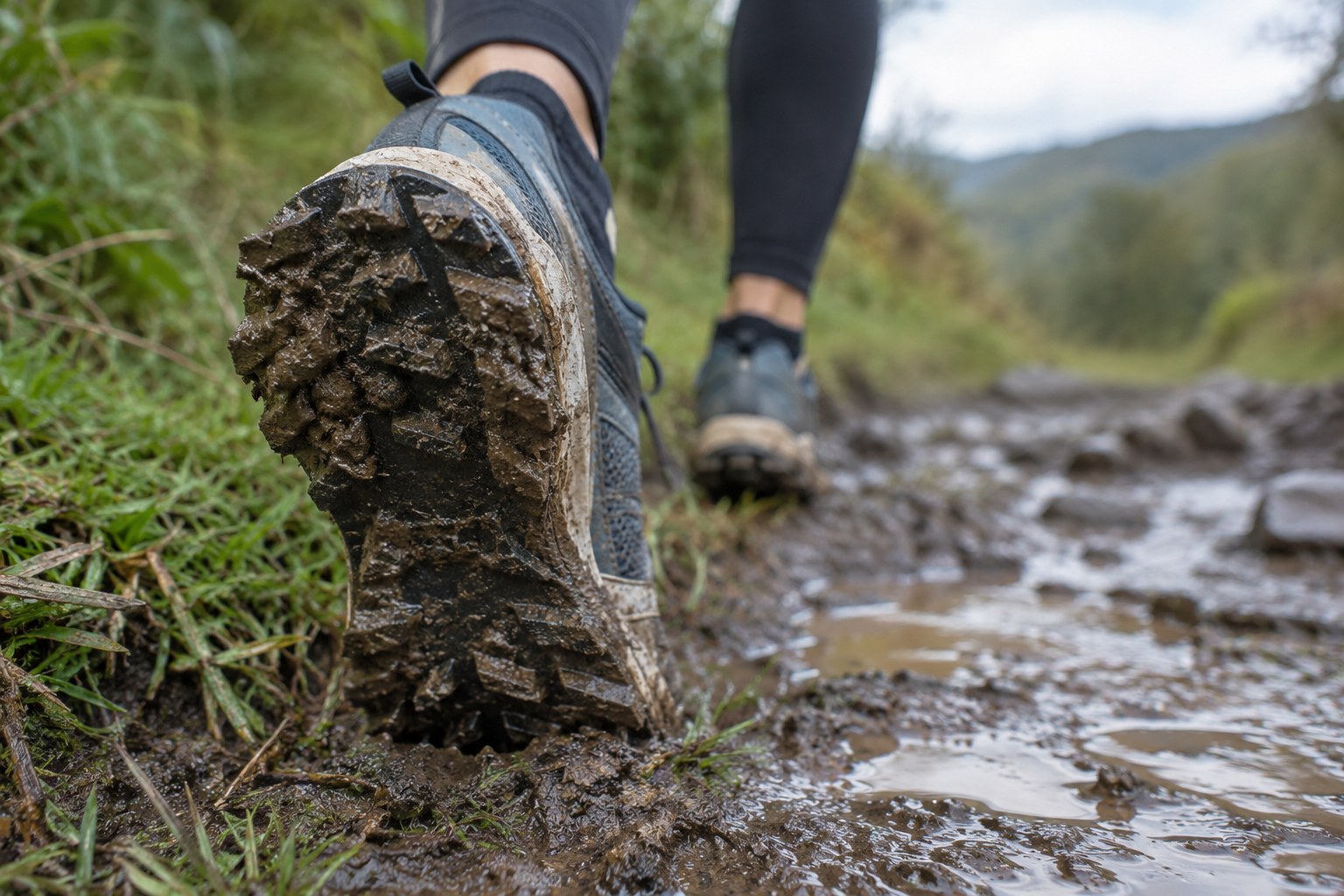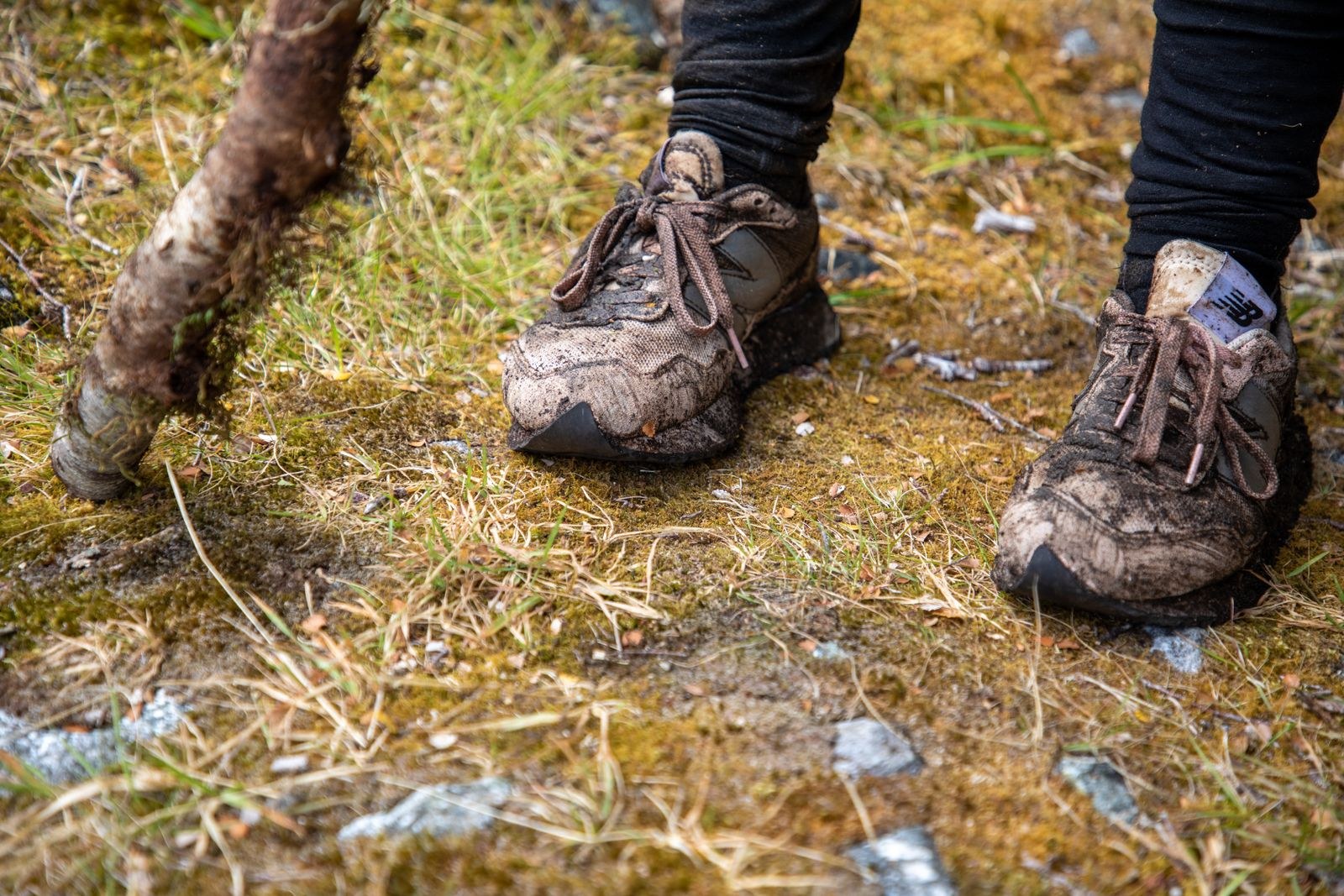
Unload before the mud dries around everything
Empty the vest and pockets onto a suitable surface. Separate food waste, electronics, wet clothing and items that need washing. Check small compartments rather than assuming the obvious rear pocket is the whole bag. A wrapper or damp glove left inside can be overlooked when the vest is put straight back with the rest of the kit.
Read the care instructions for each item before choosing water, detergent or a machine cycle. Shoes, a waterproof jacket and a hydration reservoir should not automatically receive the same treatment. Remove loose dirt using the method appropriate to the item, keeping water away from openings that are not designed for it. Do not turn a general clean-up into an improvised waterproofness test.
Inspect what the dirt was hiding
Look at the shoe uppers, seams, laces and outsole once they are visible. Check for trapped stones, damaged fabric and anything separating or moving unexpectedly. Compare both shoes rather than studying only the muddier one. If a problem affects secure use, set the pair aside for assessment instead of assuming it will disappear when dry.
Check vest buckles, elastic, pocket closures and pole attachments. Mud can make a fastening feel stiff without revealing whether it is damaged. Clean it as directed, then test it again without forcing it. Look at the areas where hard items rubbed against fabric during the run; moving a phone or flask may prevent the same problem on the next outing.
Separate a care task from a repair decision
Use two clearly different places for equipment that only needs drying and equipment with an unresolved fault. Otherwise a damaged fastening can return to the ready pile once everything looks clean. Add a short label or note describing what needs attention. For example, a pocket zip that still catches after permitted cleaning should remain a question to resolve, not disappear from memory because the mud has gone.
Keep the product reference and a clear photograph if you need advice from the maker or retailer. Describe what happens during ordinary use without pulling harder to demonstrate the defect. Check any proposed repair against the component’s intended function, especially where it retains water, poles or another important item. After an approved repair or replacement, repeat a modest loaded test near home. Looking tidy on the table is not the same as functioning correctly when the vest or shoes are used again.
Dry, then repack
Allow items to dry according to their own instructions before closing them away. Avoid treating a warm radiator or another direct heat source as a universal shortcut. Keep components spread or opened as appropriate, and check hidden areas such as removable parts and pocket folds. A dry outer surface does not always mean the packed item is ready for storage.
Make a short note of what needs action: a worn lace, an awkward closure or a pocket that collected water. Resolve those points before reconstructing the usual kit. Repacking immediately into the same arrangement can hide an unresolved issue until the next departure. The inspection is complete when the equipment is clean enough to assess, appropriately dry and either ready to use or clearly set aside.