Separate a view from a route assessment
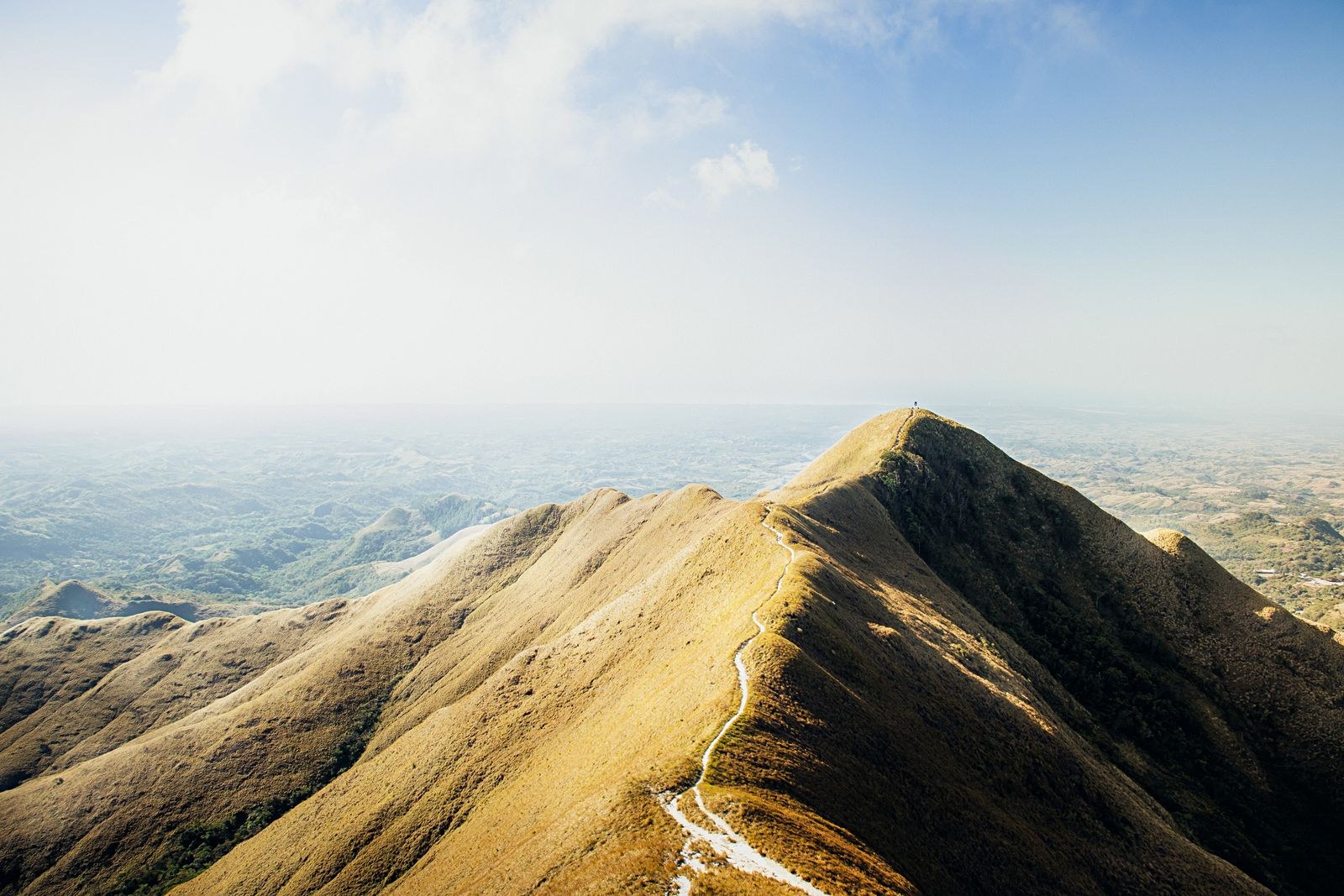
A photograph showing a beautiful crest says little about the usable width, the drop beside it or the difficulty of retreat. Read the route description and map together. Identify where the exposed section begins and ends, whether it involves scrambling, and whether the alternative actually reconnects with your intended return. An attractive summit is not sufficient information for choosing the approach.
Check a forecast that covers the hills and the timing of your passage, not just the nearest town. Wind, cloud and thunderstorms can affect the decision even when the valley looks pleasant. Avoid building the whole outing around the hope that conditions will improve at exactly the right moment. Set a lower, less exposed alternative before leaving home.
Use the last sheltered decision point
Pause somewhere safe before the ridge. Look at the ground ahead and discuss how everyone feels about it. If a companion is uneasy, treat that as useful information rather than something to overcome with encouragement. The group needs an option that suits its least comfortable member; splitting up casually on unfamiliar ground can create a second problem.
Check what a change of plan would involve now. Returning along a known path may be simpler than completing a loop whose next section is uncertain. Do not assume that reaching the far end of the ridge will reveal an easier descent. If the map or description does not establish that connection, it remains an unknown rather than a backup.
Compare two complete routes before choosing
Consider a loop with a ridge halfway through and a lower alternative leaving from the last village. Compare them from start to finish, including distance to the car and the terrain on the return. The lower option may be shorter but still require a road connection you have not examined. Mark its junction before setting off, so changing plans means following a prepared route rather than inventing one when visibility is already poorer.
Give the ridge a latest decision time based on the whole outing, not a target that encourages rushing to arrive just before it. If reaching the decision point uses more time than expected, the return margin has already changed. Discuss that fact with companions before looking at the attractive view ahead. A clear alternative reduces the feeling that retreat wastes the day and makes it easier to respond to actual conditions rather than the effort already invested in reaching the ridge.
Keep the criteria clear
Poor visibility, difficulty staying balanced in wind, deteriorating weather or terrain beyond your experience are reasons to avoid committing. Equipment does not convert an unsuitable route into a suitable one. A jacket can address exposure to rain, but it cannot widen a path or provide experience on steep ground. If winter conditions appear, do not treat them as ordinary trail conditions with extra clothing.
Leave time for the less ambitious option. A plan that only works if the ridge goes perfectly makes turning back feel expensive, which can distort the decision. Build a satisfying outing around a lower loop, a viewpoint reached by a broad path or an earlier return. Record the ridge as a possibility for a different day, with better information or appropriate guidance, rather than as unfinished business that must be completed today.