Identify the garment before the setting
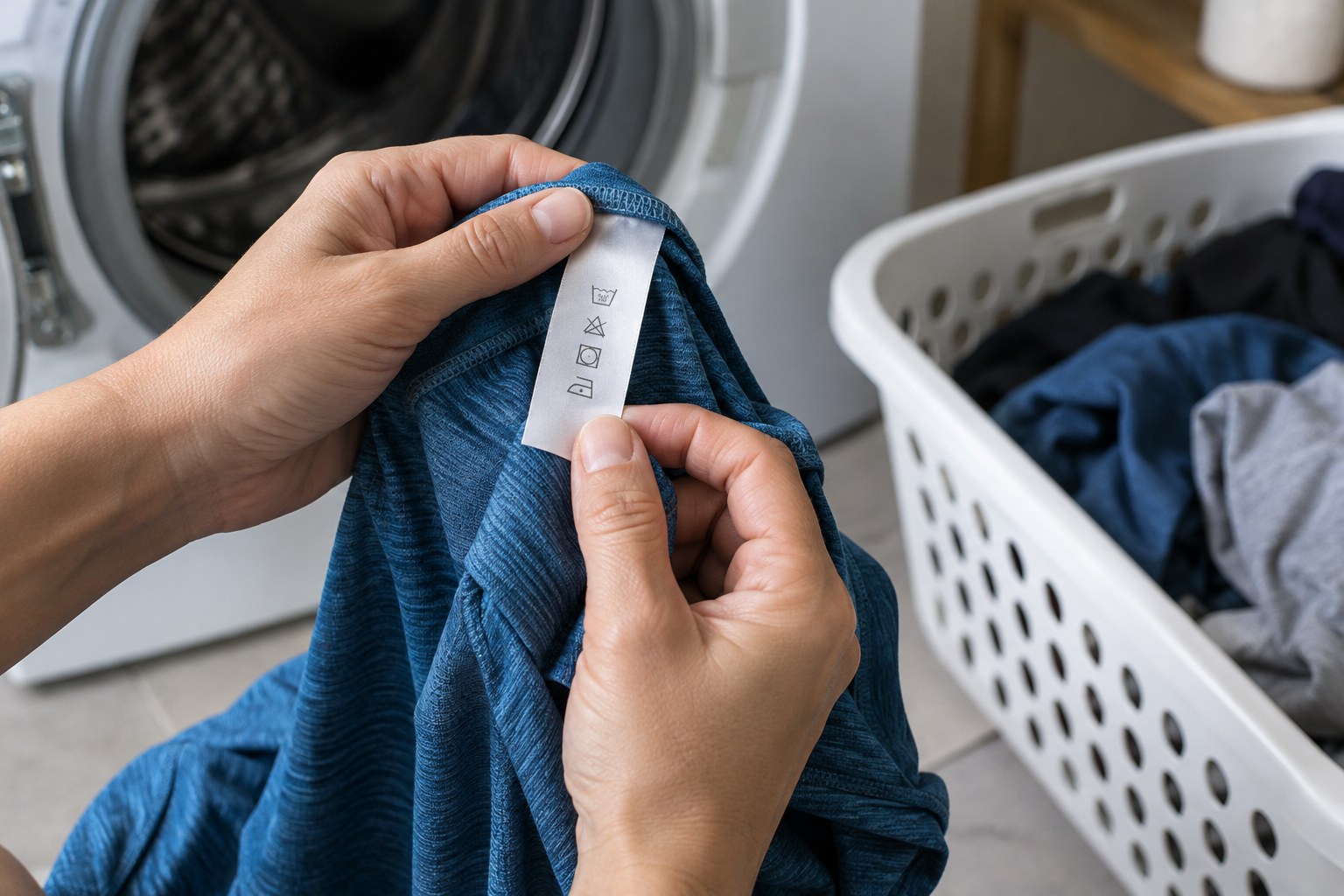
Find the label and the manufacturer’s guidance for the exact item. A lightweight shirt, insulated layer and waterproof shell may need different treatment. If the label is difficult to read, use the product reference to find the instructions rather than guessing from the feel of the fabric. Keep a photo or note for garments whose label may become less legible over time.
Check the permitted wash method, temperature, drying process and any product restrictions. Do not transfer a treatment from one membrane or fabric to another. GORE-TEX’s care guidance itself distinguishes special constructions and directs users to the garment manufacturer’s instructions. That is a useful reminder to identify the item before choosing a familiar laundry routine.
Prepare the load deliberately
Empty every pocket and remove items that should not be washed with the garment. Check for tissues, food packaging and detachable accessories. Follow the instructions for closures and loose straps. Inspect visible damage before washing so that a loose seam or fastening can be addressed rather than disappearing into a mixed load.
Choose a cleaning product compatible with the care guidance and measure it as directed. More product is not a substitute for understanding the instructions. Keep incompatible garments separate and avoid adding a treatment because another runner recommended it for a different item. If the washing machine’s settings are unclear, consult its manual before choosing the nearest-sounding programme.
Finish the care sequence
Remove and dry the garment using its permitted method. A wash cycle is only part of the care routine; do not automatically use the drying setting from another load. If the manufacturer specifies a particular follow-up treatment, follow the exact guidance rather than improvising heat or a spray. Some garments need different handling even within the same broad product family.
Once dry, check pockets, closures and the areas that showed wear before washing. Store the item where its condition remains clear, and note any unresolved issue before the next outing. Keep the routine simple enough to repeat: identify, prepare, wash as instructed and finish correctly. This is more useful than memorising one supposedly universal temperature for all running clothing.