Look at the dressed runner, not the garment
Put on the jacket, vest and other equipment together. Ask a companion to check front, back and sides from a safe place away from traffic. A reflective panel on a shirt may disappear beneath the vest, and a jacket tied around the waist can cover details on another garment. Do not count features that are hidden once the outfit is complete.
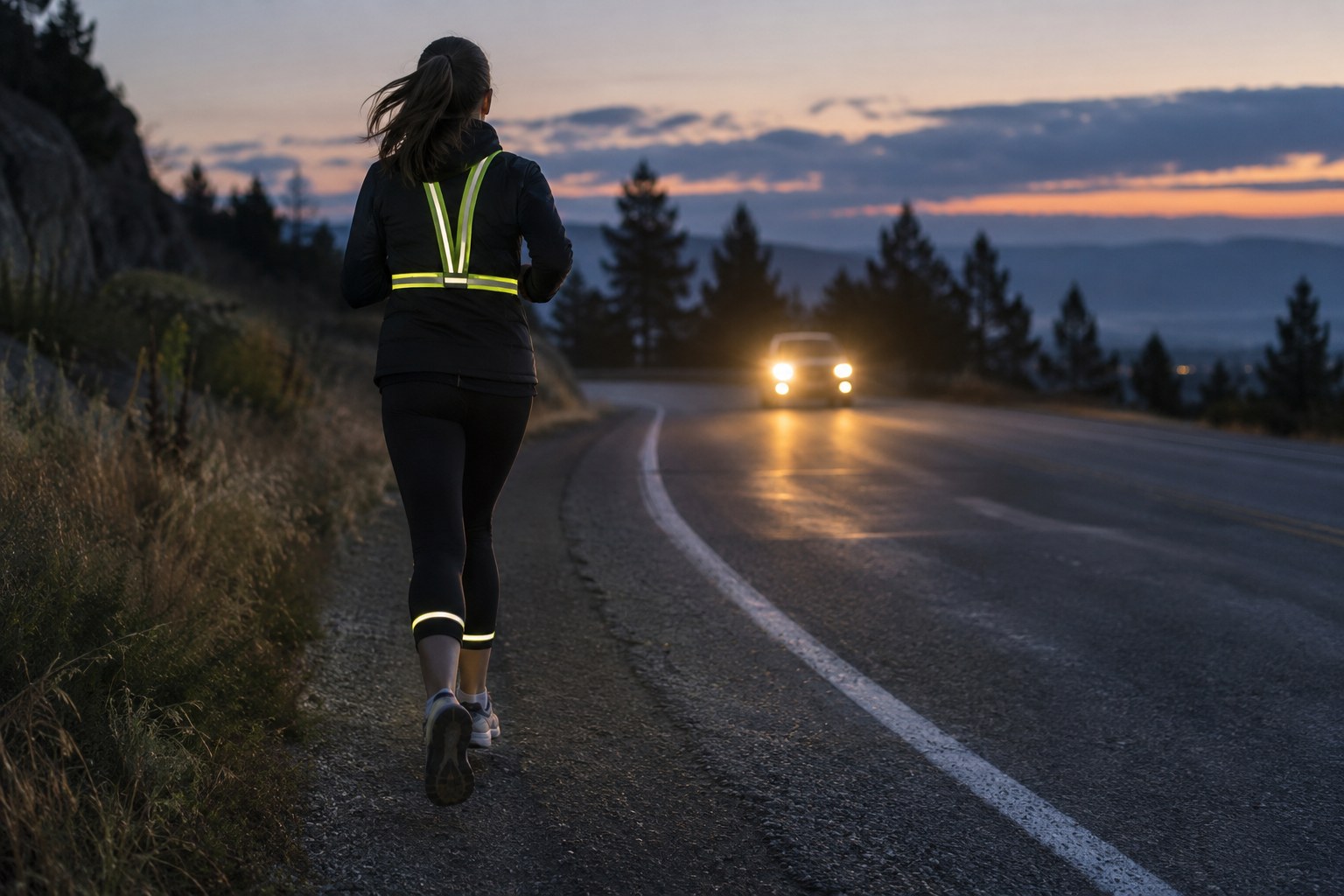
Inspect the material for dirt, damage or peeling, and follow its care instructions. A product’s bright daytime colour and its reflective elements are different features. Read the description to understand what is provided. French road-safety guidance recommends light clothing and retroreflective details when visibility is poor; that recommendation does not mean a particular outfit guarantees detection by every driver.
Keep the check away from live traffic
Use a controlled, safe setting to see whether the details are uncovered. Do not stand in a road or ask someone to drive towards you as an improvised visibility test. A photograph or a simple light check can help locate covered areas, but it is not a certified measurement of stopping distance or real-world visibility.
Check again when adding a rain layer or changing the way you carry a bag. The outermost arrangement is the relevant one. If an accessory rotates or slips while running, reposition it according to its instructions and verify that it stays comfortable. Avoid dangling additions that catch on clothing or distract you from the surroundings.
Preserve the other parts of the plan
Choose a route with suitable pedestrian space and crossings, and remain attentive to vehicles and other users. Reflective details do not replace checking before crossing or make a poorly suited road a good running route. Likewise, a headlamp used to see the ground does not answer every question about how you appear from behind or the side.
Before leaving, consider the return light conditions as well as the start. Pack the arrangement needed for the whole outing rather than assuming you will finish before visibility changes. If the route or weather makes the road sections uncomfortable, alter the route. Equipment supports the decision; it does not remove the need to make it.