Start with named routes, not a patchwork
The Saverne tourist office lists walking suggestions including the Haut-Barr castle walk, the Grand Circuit du Brotsch and the Circuit des Châteaux. These names give you a useful research shortlist. Their presence in a directory does not establish that every section is currently open or suitable for continuous running.
Choose the question that matters for your outing. Do you want a short introduction to woodland paths, a visit to a particular landmark, or a longer route with climbing? A circuit that links several sights may involve more navigation and stopping than a simple out-and-back. Keep the first visit small enough to explore without protecting an ambitious distance target.
Open the individual route description and locate its actual departure point. Starting in central Saverne, at a car park near a landmark or beside a forest entrance creates different outings. Include the connecting section in your plan rather than treating it as invisible extra distance. Check that the intended arrival method works for that precise start.
Examine the parts between the landmarks
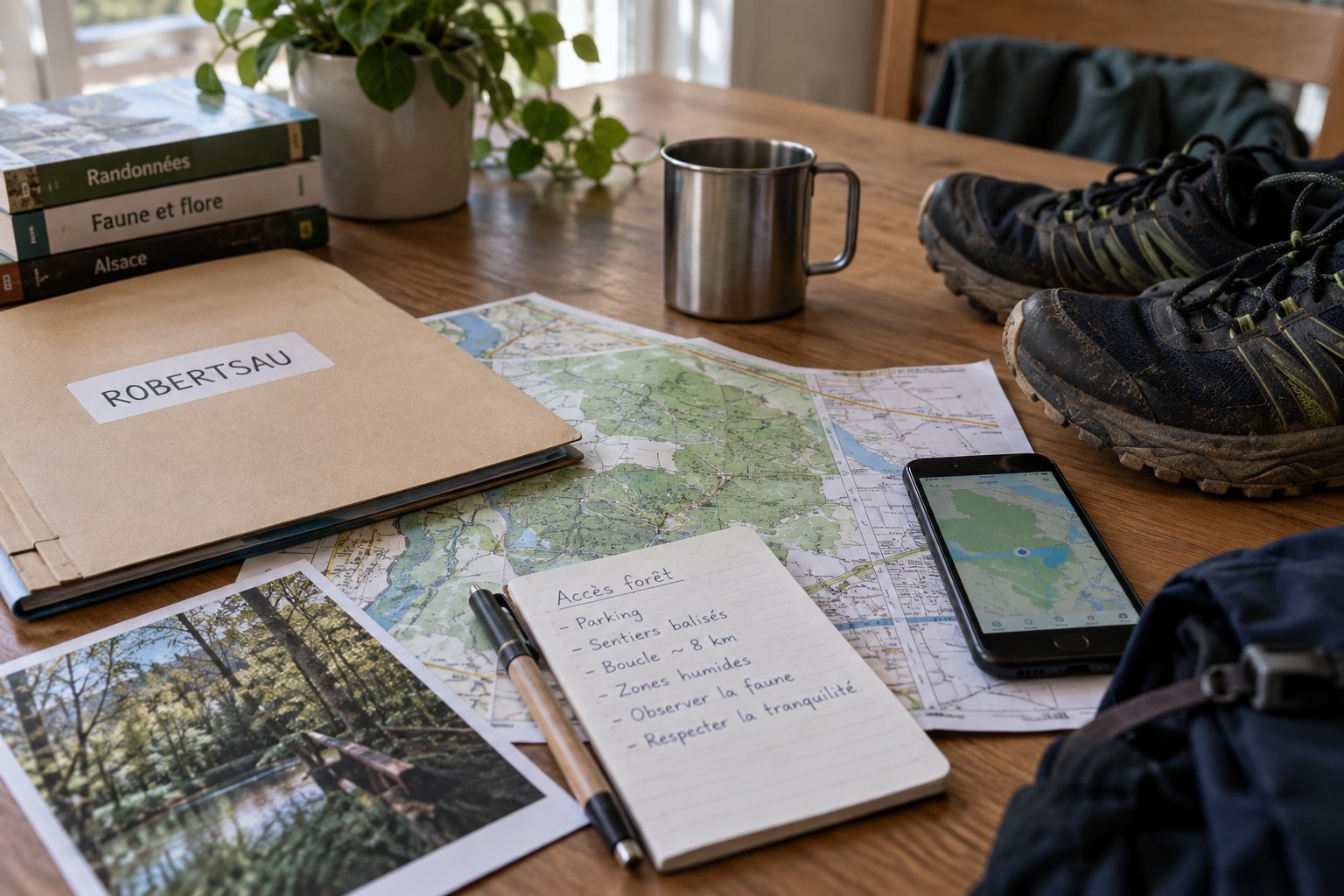
Mark the junctions where the route changes from a broader track to a smaller path. Read the map beyond the highlighted line: nearby roads, contour patterns and alternative public exits help explain the route's shape. A castle symbol is an attractive destination, but it tells you little about the approach underfoot.
Separate access to the walking route from access to a building or visitor area. A planned pause at a monument should not be essential to finishing the run unless its opening arrangements have been checked. Equally, a nearby road is not automatically a useful escape route if you cannot reach it on an authorised path.
Before leaving, look for current notices from the route manager, local authority or tourist office. Save the source and date with your route file. A downloadable track that has been available for years can still be useful for orientation, but its age should prompt questions about changes rather than confidence about present conditions.
Give the first visit a modest purpose
For example, investigate one approach and return along the same known section if the ground or navigation takes longer than expected. That produces useful knowledge for another day: where the real start is, which junction requires attention and which surfaces slow you down.
Afterwards, record observations with a date and direction of travel. Describe the section you actually covered and leave unvisited branches unassessed. A note saying that one junction needed careful reading is more helpful than declaring the whole forest easy or difficult.