Match the figure to the setting
Read the runtime table for the exact lamp and power source. Identify which mode the quoted duration belongs to and how the manufacturer defines the end of that duration. A low-output reserve is not necessarily suitable for continuing to run on the same terrain. Keep the model’s instructions available while making the plan instead of combining figures from different versions.
Estimate the period when you may need useful light, including an earlier dark section or a slower return. Add the time involved in route checks and ordinary stops. If the plan only works when every segment goes exactly as expected, shorten it or provide a more appropriate lighting arrangement. Do not rely on lowering the light below what the ground requires simply to preserve a timetable.
Check the power source as equipment
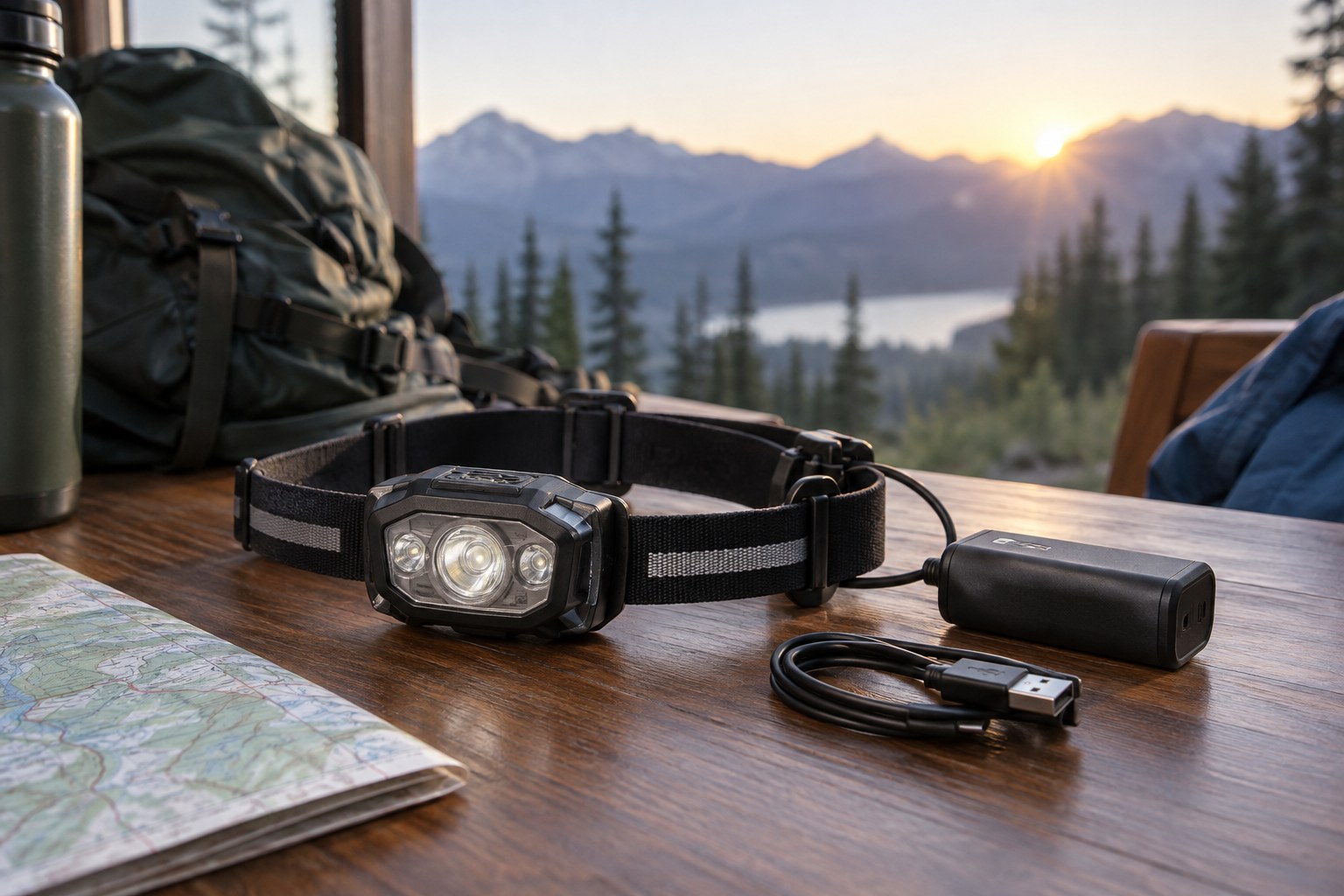
Charge or prepare the lamp according to its instructions and confirm the indication before packing. Check the cable, connector and any removable battery for visible damage. Use compatible components, and protect spare batteries from contact or damage as the manufacturer directs. A loose spare mixed with keys is not a thoughtful reserve arrangement.
If the lamp allows a battery change, practise in a bright, dry place. Know which cover opens, how the component is oriented and what must be secured afterwards. Keep any small parts controlled. If a replacement is not designed for field use, do not invent a disassembly procedure beside the trail; choose another backup method suitable for the outing.
Keep the backup reachable
Place the spare light or compatible power source where you can find it without relying on the main lamp. A consistent pocket and protective container help. Test the backup before leaving, including its controls and charge. An old lamp stored for months should not be assumed ready merely because it was once functional.
For a group, discuss whether everyone has adequate lighting for the plan. One person’s spare may support a limited contingency, but it should not silently become the only reserve for several unprepared runners. Keep communication devices and route information in mind too; the same power bank cannot be promised simultaneously to every device without considering its actual compatibility and capacity.
Use a local rehearsal to refine the plan
Try the intended mode on a short familiar outing and note the starting indication, duration and any changes in usable light. Do not deliberately run a battery flat on a remote route to measure it. A controlled test close to home gives useful observations without making the return depend on the result.
Afterwards, recharge and store as instructed, and record any unexpected behaviour before the next outing. Treat a warning or unreliable connection as something to resolve, not a detail to remember while packing in a hurry. Your reserve plan should remain simple enough to explain: the mode you will use, the time it must cover and the usable alternative if the main light cannot do that job.