Record the exact item
Write the model, version, size and any relevant compatible parts. Keep a photograph of the label if that is easier than copying a long reference. Add when it entered use, without treating the date alone as a replacement deadline. A product name that stays the same across revisions may hide changes in shape or features.
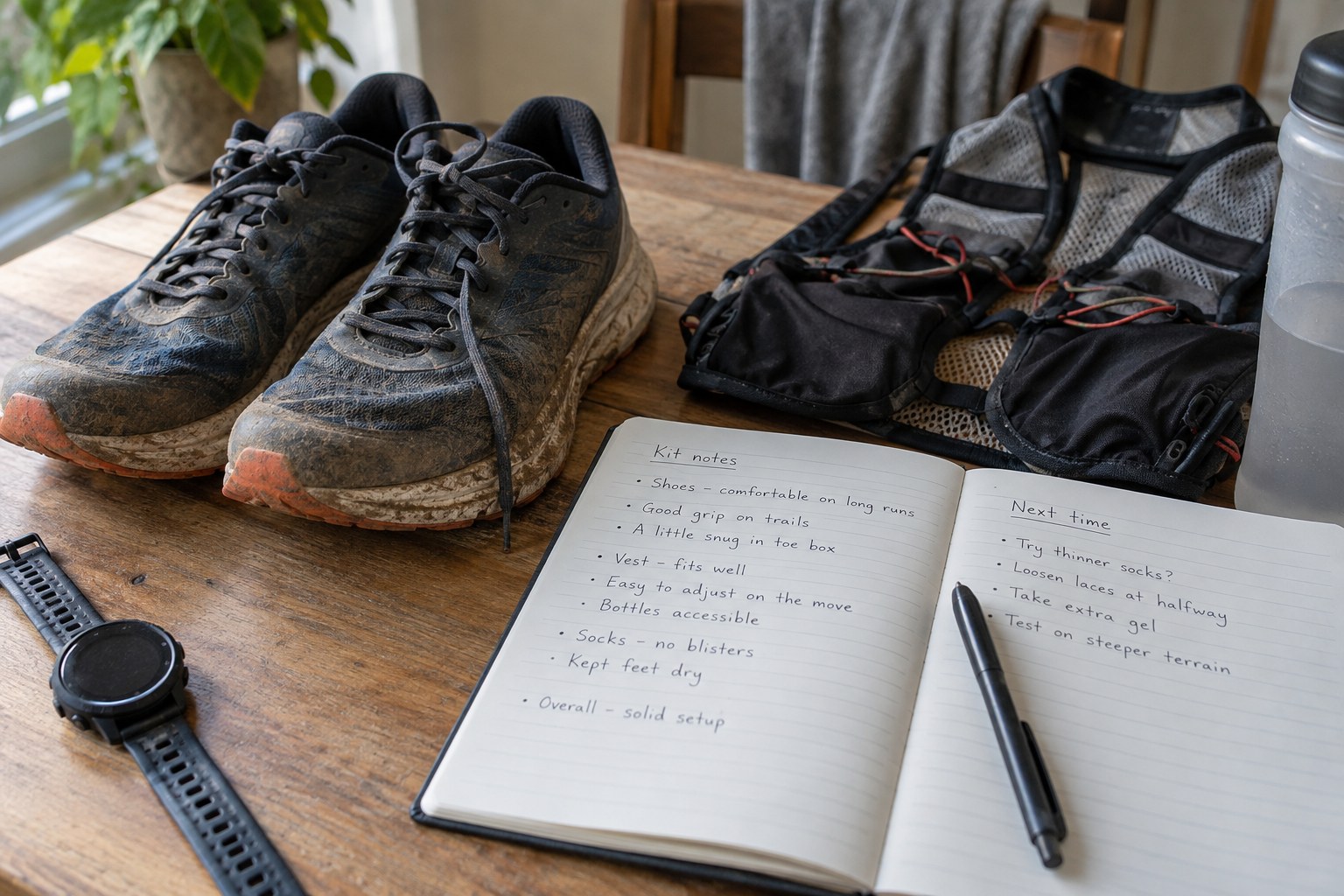
Include the setup that mattered: socks with shoes, clothing under a vest, lamp mode or flask type in a pocket. The item rarely works in isolation. If a belt felt comfortable with a phone but not with additional water, that distinction is more helpful than a simple positive or negative rating.
Describe one observation clearly
Use concrete wording such as the rear pocket was blocked by folded poles or the jacket cuff was difficult to close with these gloves. Note the route conditions and the adjustment tried. Avoid invented precision: you do not need a numerical score for every feature to keep a useful record. A short sentence that identifies the problem is enough.
Separate preference, damage and maintenance. Wanting a larger pocket is different from a broken zip; a dirty fastening may need care rather than replacement. Record the result after cleaning or a supported adjustment so that the first complaint does not remain the only information. Keep unresolved issues visible before the next use.
Turn the note into a buying question
Before replacing the item, identify what the next one must preserve and what must change. Bring that question to a fitting or product comparison. If the existing shoe shape works but the pair is worn, verify the current version rather than assuming continuity. If a vest’s pocket layout caused difficulty, compare the specific access sequence instead of shopping only by capacity.
Archive notes for retired equipment but keep them distinguishable from the current setup. Remove a product from the ready-to-use list when its condition makes it unsuitable. The record should make packing and purchasing simpler, not become a collection of vague opinions. A few accurate observations can prevent repeating an incompatible combination while leaving room to choose differently for a different type of outing.