Describe the route after dark
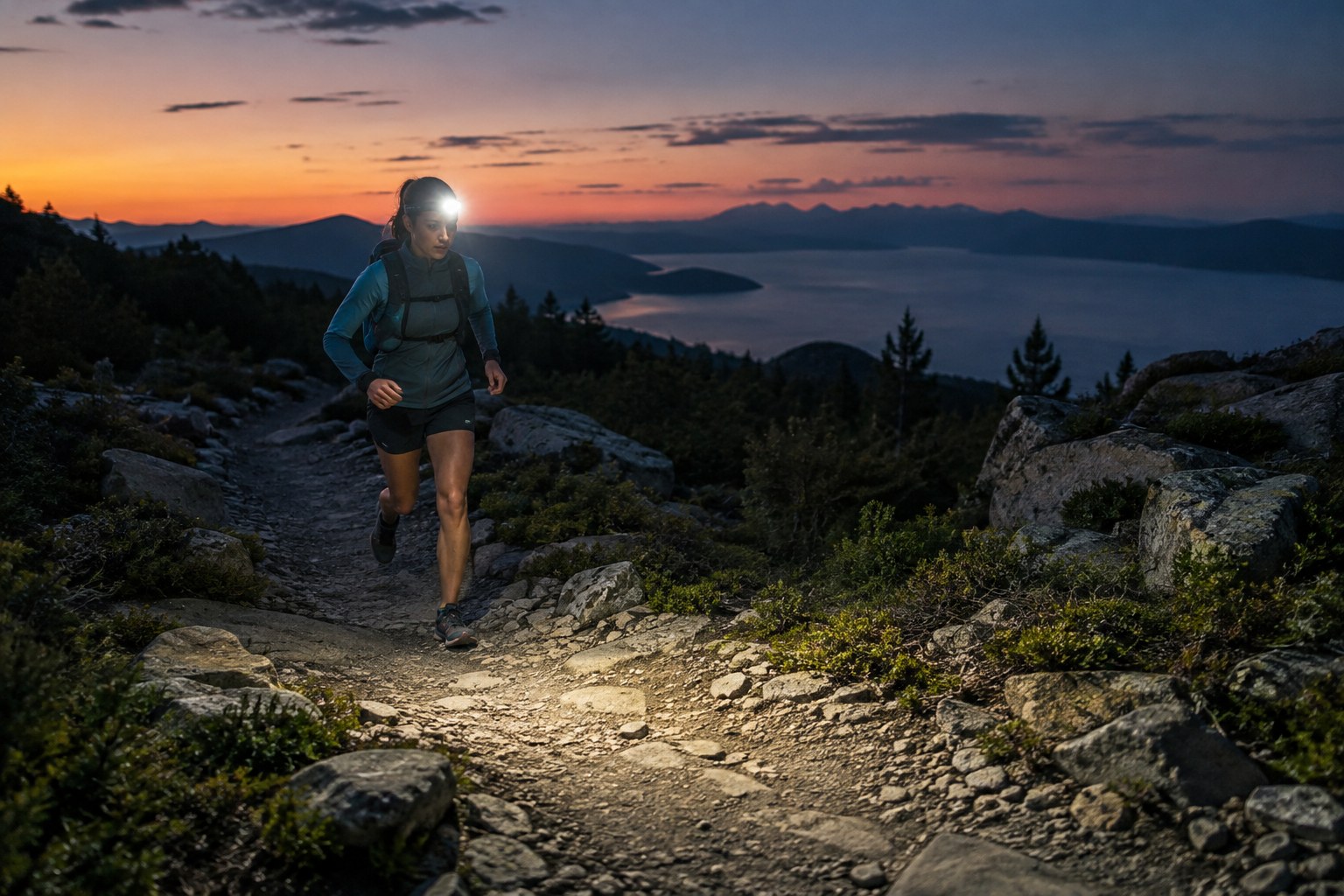
Begin with the surface and the speed at which you intend to travel. A broad familiar path, an uneven descent and a route with frequent junctions create different viewing tasks. Consider whether you need to see nearby edges, the direction ahead or a sign while stopped. Avoid selecting a lamp only from the longest beam-distance claim if most of the outing requires a comfortable view of the ground close by.
Keep the first night outing modest enough to assess the lamp without committing to remote terrain. A product comparison is easier when you know what felt difficult: a narrow view, an unstable beam or controls you could not operate. If you have no such experience yet, start with a short familiar route and an appropriate, verified lighting setup rather than buying around an imagined extreme event.
Compare usable modes, not only maximum output
Read the manufacturer’s description of beam shapes and modes. Check which setting you are likely to use for the intended task and its stated runtime. Petzl explains that light output and runtime are linked; increasing one can reduce the other. Do not combine a maximum-brightness headline with a runtime quoted for a different, lower mode as if they describe the same performance.
Look for the conditions and definitions behind the figures. A reserve or low-output state may not provide the view you need for running. Read the exact model’s instructions to understand what happens when power becomes low. Avoid assuming that a lamp remaining visibly on means it continues to support the same activity at the same speed.
Check the beam in a permitted test
If a shop or manufacturer offers a demonstration, compare modes against real surfaces at useful distances. Look for a view that lets you understand the ground without constant head movements. Do not shine the light at people to judge its strength. Ask about trial or return conditions before taking a new lamp outside, then keep any test within those conditions.
Fit it with the cap or hood you intend to use. Walk and jog briefly in a safe place to assess movement. A suitable beam pattern can still be awkward if the lamp bounces or the angle slips. Learn the tilt mechanism without forcing it, and check that a cable or rear battery arrangement does not catch on the collar or vest.
Make controls part of the choice
Find the on/off action, mode change and lock if provided. Try them with the gloves you expect to wear. You should be able to identify the intended mode without cycling blindly through unwanted settings while moving on difficult ground. If an app is involved, establish what can still be operated directly on the lamp without a phone connection.
Practise lowering the beam or turning away when speaking to someone. A lamp that helps you see should not repeatedly shine into a companion’s eyes. Keep adjustments to safe stops until the operation is familiar. Treat the first outing as a chance to evaluate the whole arrangement, not a test of how fast you can run in a new beam.
Match the reserve to the outing
Plan for a longer return than the ideal schedule and provide a suitable backup for the route. Verify charging, spare-battery compatibility and any replacement procedure using the exact instructions. A spare item is useful only if you know how to use it and can reach it without emptying the pack in darkness.
Write down the mode used, the route conditions and any practical limitation after the trial. Avoid turning one outing into a universal runtime claim. Your notes should help you decide whether the lamp suits the next route and what preparation it needs, while leaving room for conditions and usage to differ.