Identify the adjustment system
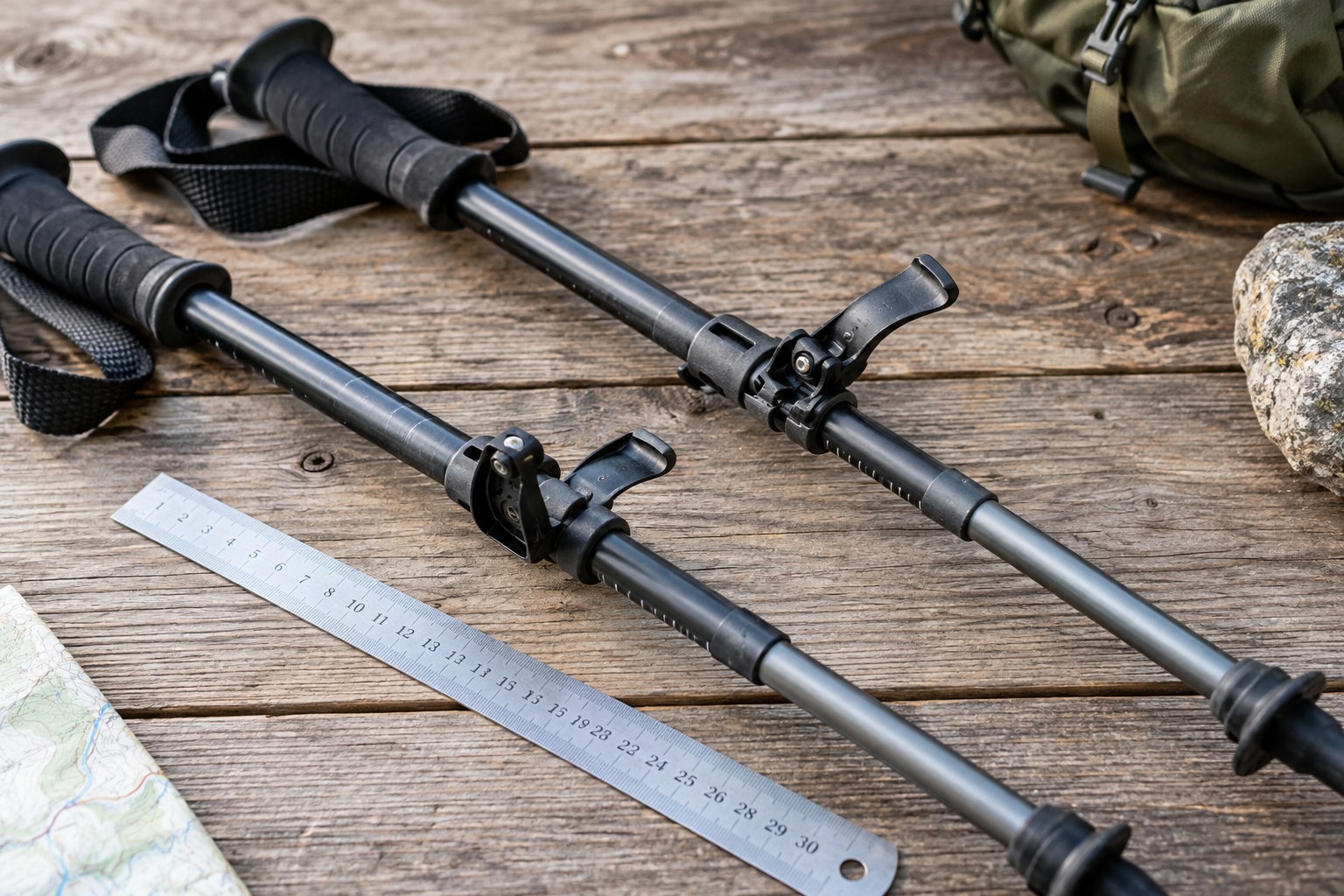
Read the manual for the exact poles. Fixed-length, telescopic and folding designs are not adjusted in the same way. Locate the permitted adjustment range and any insertion or extension limits. Do not extend a section beyond a marked limit to achieve a preferred height, or assume a locking method from another pair applies.
Start with the maker’s sizing guidance and, if needed, ask a competent fitter to help assess the length for your intended use. Try the pair with the footwear and carrying arrangement you expect to use. A size chosen only from a photograph or someone else’s height may not answer the actual fitting question.
Check both poles separately
Assemble or extend each pole as directed and confirm that every section is seated and locked. Compare the markings and inspect the joints for dirt or visible damage. One correctly assembled pole does not prove the other is ready. Keep fingers clear of the mechanism and do not force parts that refuse to engage normally.
Perform the manufacturer’s recommended security check in a safe, controlled setting. If a section slips or the lock does not hold as specified, stop using it until the cause is resolved. Avoid improvising tape or excessive tightening as a permanent answer. A mechanism may need cleaning, adjustment or replacement according to its own instructions.
Distinguish a length change from a lock adjustment
Moving a telescopic section within its permitted range and changing the tension of a locking mechanism are different operations. Do not assume both should be performed whenever the pole slips. Read the model’s troubleshooting sequence and identify which control is intended for which task. If the instructions specify a tool or a particular inspection, complete that preparation in a suitable place rather than guessing beside the trail.
For a folding pole, check whether the visible markings refer to overall usable length or only to the adjustable upper section. Compare the fully assembled pair before judging a difference. Keep the sections belonging to each product together and do not combine apparently similar components without confirmed compatibility. If a pole has been loaned, adjusted by someone else or serviced since the last outing, repeat the complete setup check. Remembered settings are useful references, but the present assembly and security of the lock are what matter before loading the pole.
Practise changes without rushing
If the model is designed to change length during use, learn that procedure at home first. Know how to restore the normal setting and check it again afterwards. Choose a broad stop on the route for any adjustment rather than changing a pole while balancing on awkward ground. Keep the tips controlled around other people.
Check that folded or shortened poles fit the intended carrier and remain secure. After the outing, clean and dry as directed, then inspect before storage. Record the model and working setting so the next preparation begins with reliable information. The useful result is not a universal pole length but a correctly fitted, correctly locked pair whose controls you understand.